In hospitality, we're often not fully aware of how much food is thrown away each day. Although the volume may seem manageable, when we translate it to monthly or annual figures, the impact is enormous. Both economically and environmentally, food waste is one of the main drains on business profitability and sustainability.
In our case, we've identified that food waste in restaurants has three very clear origins: food deterioration, plates returned from customers, and errors or excess in preparation.
Additionally, waste can occur at different stages of the preparation and service process, and one of the most common is over-preparation. We often cook more than we'll actually serve, generating unnecessary waste volume.
Why is food waste so common in hospitality?
There are many factors that explain why this happens:
- Inaccurate demand forecasting.
- Poor inventory rotation.
- Lack of knowledge of real customer preferences.
- Lack of standardized processes in the kitchen.
One of the biggest mistakes we used to make was preparing extra "just in case", without real control of consumption patterns. This not only increased waste but also operating costs.
Today, we've learned that reducing waste is a strategy related to business efficiency, not just sustainability.
Strategies that have worked for us to reduce waste
Over time, we've implemented specific measures that have helped us reduce wasted food:
1. Purchase optimization and consumption forecasting
We use systems like Controliza's Purchasing module for Hospitality that help us adjust purchases to real demand. This prevents us from storing more product than necessary, reducing deterioration.
2. Inventory digitization
Thanks to control tools like Stock Control for Hospitality, we can monitor in real time which products are at risk of expiring. This prevents losses from oversight or poor management.
3. Constant review of recipes and recipe costing
We periodically review our recipes to ensure portions are correctly calculated. This prevents leftover food in both kitchen and dining room.
The role of technology in food waste management
There's no way to reduce waste without real data. In our case, tools like Controliza's Forecast module have helped us anticipate demand based on history and other factors like weather, day of the week, or local events.
This has been key to avoiding over-preparation. Thanks to it, we've significantly decreased waste and improved the profitability of each service.
Additionally, integration with modules like Big Data for hospitality allows us to analyze consumption trends and adjust our offering, reducing the volume of low-rotation products.
What benefits does reducing food waste bring?
The results have been more than evident:
- Reduced operating costs.
- Greater utilization of raw materials.
- More satisfied customers (fewer dishes with excessive portions).
- Lower environmental impact.
- Better brand image: customers value sustainable businesses.
Reducing food waste is not only an ethical obligation but also a profitable commercial strategy.
How does to control waste in buffets without relying on guesswork?
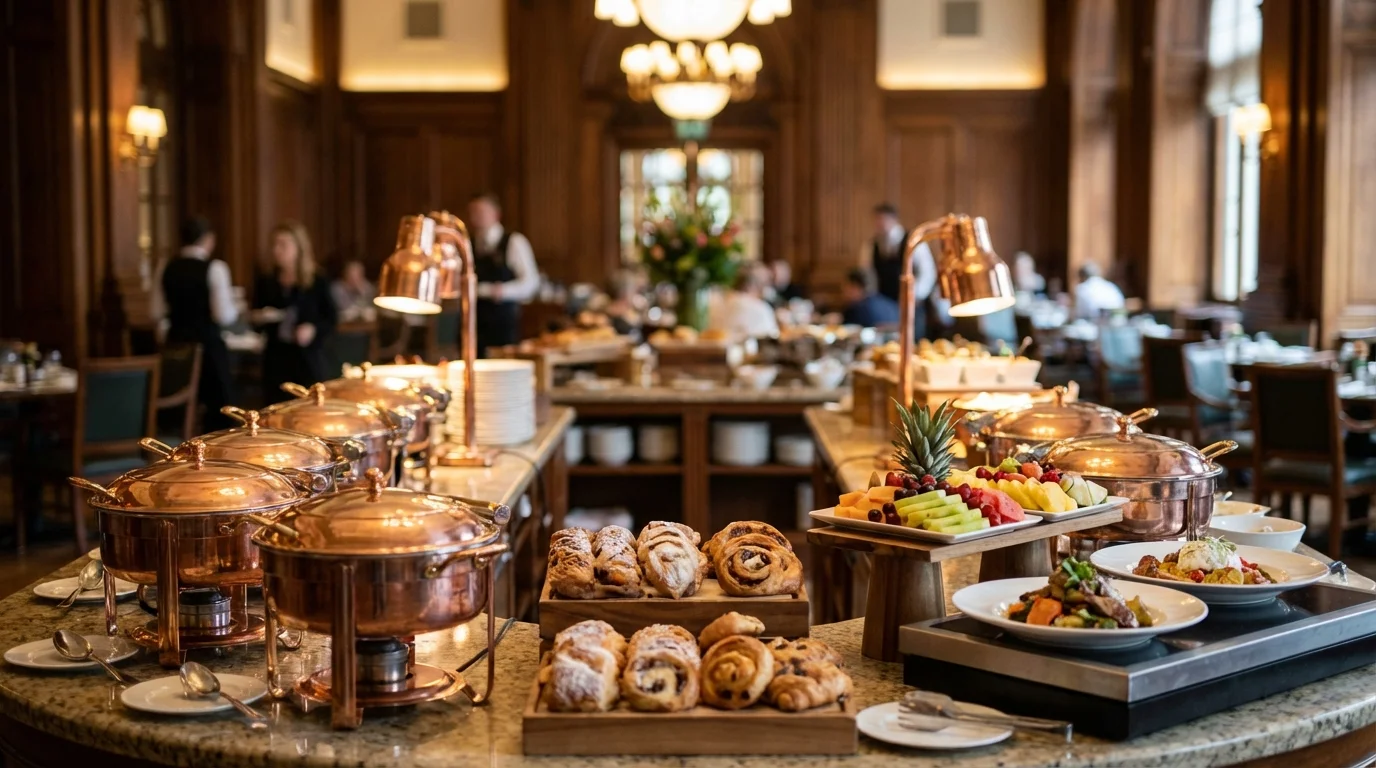
If there’s one critical area where waste can easily spiral, it’s the buffet. Unlike other service formats, the issue here is not usually just poor purchasing or outdated recipe costing, but producing and replenishing without real visibility into what is happening in each time slot. When you don’t know how much is actually being consumed, when demand drops, or which items run out first, operations end up running “by feel.” And when replenishment is driven by perception, service pressure, or fear of running short, the result is almost always the same: overproduction, waste at the end of service, and a food cost that is higher than it should be. This is especially common in hotel breakfasts, institutional buffets, or high-turnover services, where the team needs to react quickly but does not have reliable real-time data. The problem is not just that food is left over; it’s that you cannot accurately prove where the waste is being generated, what it really costs, or which operational decisions are causing it.
In this context, the key is not to produce less across the board, but to produce better. That means understanding real consumption curves: when demand starts, when it accelerates, when it stabilizes, and when it no longer makes sense to maintain the same replenishment level. With Controliza Buffet, this visibility no longer depends on the team’s subjective experience, because it combines computer vision and automatic weighing to measure actual buffet consumption in real time. This allows you to see which trays turn over the fastest, which products are consistently overexposed, and which moments of service concentrate the highest volume of unnecessary replenishment. This information completely changes the way kitchen and front-of-house teams work: instead of filling everything from the start as a precaution, you can apply staggered production and data-driven replenishment. In practice, this means adjusting quantities by time slot, reducing product exposure in the final stages of service, and making more precise decisions about what is worth replenishing and what is not. The impact is significant: when you control actual consumption, it is common to reduce waste by 15% to 25% and lower cost per cover by 10% to 15%, without harming the guest experience.
In addition, this approach has operational implications that go far beyond simply “throwing away less food.” Once you start measuring properly, you can connect waste with other key areas of the business: purchasing, stock, recipe costing, planning, and traceability. For example, if you detect that certain products generate recurring waste in specific time slots, you can review orders, adjust delivery notes against actual consumption, and redefine planned production to prevent surplus from becoming tied-up stock or expiring. You can also identify whether the problem lies in the display format, the replenishment size, or even in a recipe whose yield does not match the real demand pattern. This allows you to fine-tune food cost more accurately, because you are no longer working only with sales and theoretical costs, but with operational evidence of what is actually consumed and what is actually wasted. And when this information is integrated with solutions such as Prediction, the leap is even greater: you not only react better during service, but also plan more effectively before it begins. You stop overestimating out of fear and start making decisions based on data.
There is another point that is becoming increasingly important in hospitality and institutional catering: the need to record waste reliably in order to comply with the Waste Law. Many companies still handle this requirement manually, with partial checks, notes taken at the end of the shift, or records that are only good enough to “tick the box,” not to manage the operation. The problem with this approach is twofold: it takes time and it does not generate operational learning. If compliance is purely documentary, you still do not know which items are draining margin, which shifts concentrate the most loss, or which changes have actually worked. With Controliza, waste recording is automated, which improves traceability and turns an obligation into a useful source of operational intelligence. Instead of simply recording that there was waste, you can analyze it by product, service moment, and replenishment pattern. This makes it possible to set standards, correct deviations, and sustain improvements over time. Ultimately, controlling buffet waste is not about cutting back on the offer, but about stopping blind operation. When you measure actual consumption, replenish with clear criteria, and automate waste tracking, waste stops being an inevitable consequence of service and becomes a manageable variable that protects your profitability.
How does to control buffet waste with real-time data?
Buffet service concentrates one of the biggest waste problems in hospitality: you replenish “just in case” because you don’t have real visibility of what guests actually consume by time slot. That creates overproduction, unnecessary leftovers, and a food cost that keeps rising without a clear explanation. On top of that, documenting waste and traceability manually usually means more paperwork and less operational control.
With Controliza Buffet, you can measure real buffet consumption in real time through computer vision and automatic weighing. This lets you build consumption curves by service period, plan staggered production, and base replenishment on data instead of intuition. The result is a reduction in waste of 15–25% and a 10–15% decrease in cost per cover.
It also gives you an automatic waste record, making compliance easier and turning waste management into a practical profitability lever, not just a documentary task. Combined with Forecasting, you can align purchasing, production, and service with actual demand much more accurately.
Conclusion: every gram counts
In the daily management of a hospitality business, we know that every gram of food thrown away is money lost. That's why we understood that tackling this problem was as much a priority as improving revenue.
When we identified that the main sources of waste were food deterioration, plates returned from the dining room, and kitchen excess, we got to work. Little by little, adjusting processes and using the right tools, we managed to turn waste from an invisible constant into a controllable metric.
We know there's still a way to go, but we're convinced that reducing waste is one of the smartest decisions we've made as a team.
If you want to know more about our tools, contact us now or visit our LinkedIn profile.
If you want to go deeper, we recommend reading Resort with all-day buffet: measure to stop wasting.

