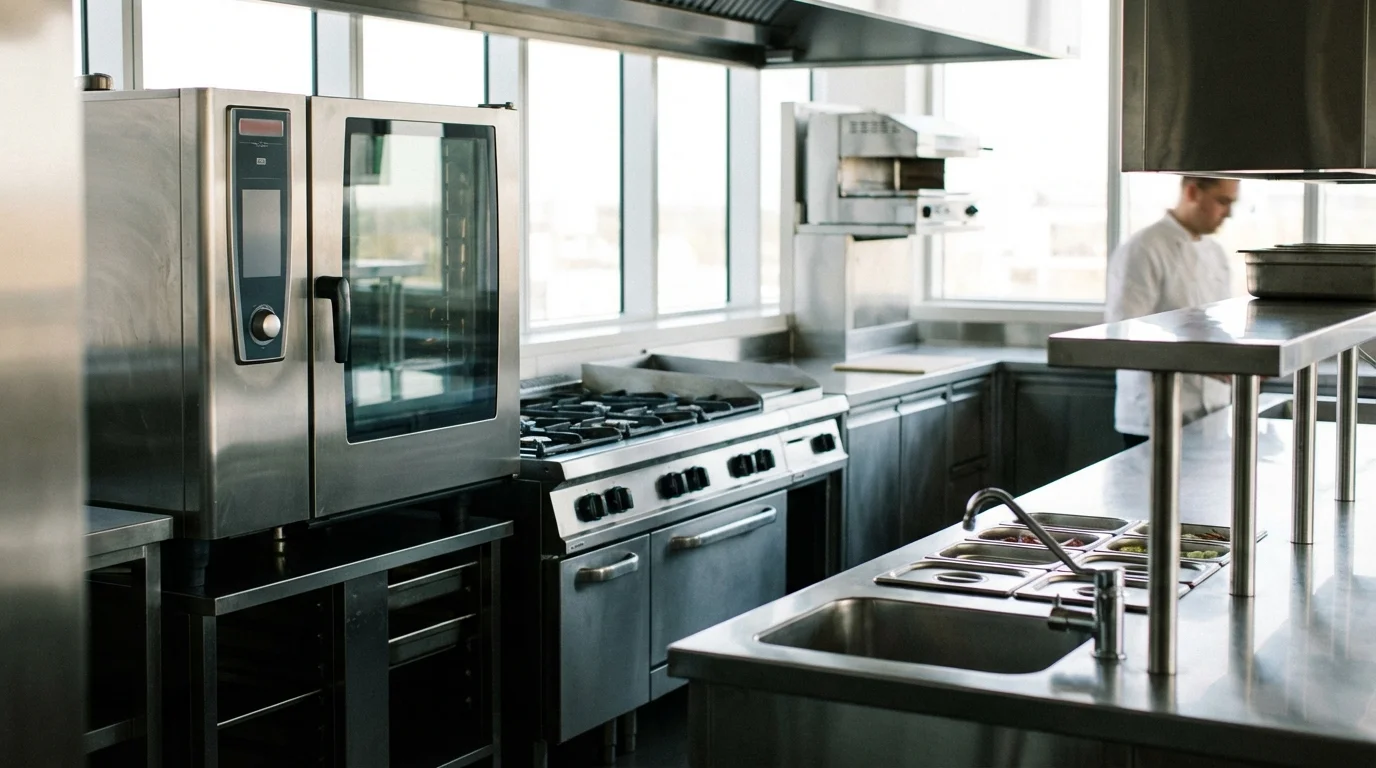
The operations director of a hotel group with 18 properties receives an urgent call: the combi oven at the Malaga hotel has stopped working during service. He needs a replacement part or a substitute unit. First problem: nobody knows the exact model of that oven. Second problem: the warranty expired two months ago and nobody knew. Third problem: there is an oven of the same model stored in the basement of the Seville hotel and has been there for a year, but nobody knows that either. The result: an emergency purchase of 12,000 euros that was probably avoidable.
The ghost equipment of hospitality
In HORECA groups with multiple locations, equipment is one of the largest and most poorly managed investment items. Combi ovens, refrigerated rooms, industrial dishwashers, dining furniture, air conditioning units: each location accumulates dozens of assets whose combined value can exceed hundreds of thousands of euros. However, the management of those assets usually comes down to a spreadsheet that nobody updates or, in many cases, to the head chef's memory.
The problem is not just not knowing what is at each location. It is not knowing what condition it is in, when the warranty expires, when the next preventive maintenance is due, or what the breakdown history is. Without that information, every incident becomes an emergency and every emergency becomes an unplanned expense.
Why assets lose their trail
When a group opens a new location, equipment is purchased, installed, and put into operation. The supplier documentation is filed in a folder that stays in the manager's office. If the manager changes, the folder gets lost or forgotten. In hospitality, where staff turnover is high, this loss of information is systematic.
Transfers between locations without records
It is common to move equipment between locations: a hotel that closes for the season sends its kitchen robots to another experiencing peak activity. If that transfer is not recorded in a centralized system, the asset ceases to exist for the originating location and appears as "unknown" at the destination. When someone needs that equipment, nobody knows where it is.
Reactive maintenance: more expensive and less efficient
The average useful life of HORECA equipment is 7 years with adequate preventive maintenance. Without maintenance, that useful life drops to 4 years. But preventive maintenance requires knowing what equipment you have, when it was last reviewed, and when the next intervention is due. Without an asset register, all maintenance is reactive: it gets fixed when it breaks, not before.
Data measured in active Controliza clients.
The hidden cost of not knowing what you have
Duplicate purchases are just the tip of the iceberg. When there is no centralized asset register, the group loses the ability to negotiate maintenance contracts at scale, claim warranties on time, plan equipment renewals, and budget CAPEX with precision.
How does Controliza solves it?
The asset management module in Controliza's Purchasing allows you to register, locate, and manage the complete lifecycle of every asset at every location in the group. From complete asset cards with model, serial number, supplier, purchase date, cost, and warranty, to automatic alerts when a warranty is about to expire or maintenance is due.
Do you know what equipment is at each of your locations right now?
With Controliza you can register, locate, and manage the lifecycle of every asset in your group. Request a personalized demo and take control of your CAPEX.
From Excel to real control: approvals, receiving, and asset traceability
The problem doesn’t end when you notice an oven is missing or a warranty has expired. It starts much earlier, at the moment the purchase is requested. In many HORECA groups, non-food purchasing still follows a blurred process: one person requests it, another approves it on WhatsApp, purchasing negotiates, the site receives it, and administration pays. Along the way, critical context gets lost: why it’s being purchased, who authorized it, whether it was a replacement or an expansion, and which site it was supposed to be installed in. The result is familiar: duplicate assets, investments outside budget, and invoices paid without confirming that the equipment received matches what was requested.
This is where asset management stops being just inventory and becomes operational discipline. If there’s no multi-level approval workflow, any urgent purchase can slip through without real validation. If there’s no dual receiving process, the group takes on unnecessary risk: paying for equipment that hasn’t been installed, is incomplete, or doesn’t meet requirements. And if the asset enters the system without traceability from day one, you won’t be able to link it later to its delivery note, warranty, incident history, or total cost of ownership. Just as you control waste, recipe costing, food cost, and traceability for products, you need the same level of control in CAPEX to prevent silent margin leakage.
With Controliza, that process is structured from start to finish. The platform applies approval workflows based on amount, asset type, or cost center, so every purchase is validated before any spend is committed. Then, dual receiving makes it possible to confirm both the administrative delivery and the operational compliance of the equipment at the site. This helps you avoid paying without evidence and eliminates one of the most expensive failures in HORECA groups: marking an asset as received when it still isn’t operational. From that moment on, the equipment is recorded with its location, supplier, warranty, maintenance, and movements between sites, creating full traceability throughout its entire lifecycle.
The practical result is less urgency and better decision-making. You can decide whether to repair, replace, or reassign equipment based on reliable information, not intuition. You can detect underused assets before approving new purchases and reduce duplicate buying, payments without sign-off, and losses from unclaimed warranties. And when you connect this control layer with analytics and Prediction, management stops being reactive: you start anticipating replacements, focusing investments where they have the greatest impact, and protecting operating margin without slowing down the operation.
From emergency purchases to controlled CAPEX
The real cost of poor asset management does not start when a machine breaks. It starts much earlier, when non-food purchases move without approvals, without traceability, and without proof that what was ordered is what was actually received. In many HORECA groups, a replacement freezer, a new dishwasher, or an air conditioning unit can be requested by email or phone, approved informally, and paid as soon as the invoice arrives. That creates three operational risks at once: purchases outside policy, assets that enter the business without a proper register, and payments released without conformity. The result is predictable: duplicate equipment, missed warranties, inflated CAPEX, and food cost pressure when critical kitchen assets fail and generate waste, service disruption, or emergency outsourcing.
What makes this especially damaging is that asset decisions do not live in isolation. A missing cold room or a faulty oven affects production planning, recipe costing, delivery notes, and traceability. If a location loses refrigeration capacity for two days, stock rotation changes, spoilage increases, and teams start making short-term decisions that raise waste and reduce margin. When there is no clear approval flow and no lifecycle record, finance sees an invoice, operations sees an incident, and nobody sees the full business impact. You are not just losing control of equipment; you are losing control of operational intelligence.
Controliza closes that gap by connecting CAPEX approval, reception, and asset lifecycle in one system. Before a non-food purchase is made, you can set multi-level approval flows based on category, urgency, or amount. Once approved, the asset is received with dual validation, so the business only pays when there is evidence that the equipment arrived in the right condition and matches what was ordered. From that point on, the asset remains traceable: location, warranty, maintenance events, supplier, and transfers between sites stay linked to a single record. That means faster warranty claims, fewer unnecessary purchases, and fewer assets disappearing into storerooms or seasonal transfers.
For operations teams, this changes the conversation from “Where is that oven?” to “Do we repair, redeploy, or replace?” with data. For finance, it reduces leakage in CAPEX and improves payment control. For the business as a whole, it protects continuity in service and helps prevent the waste and margin erosion that follow equipment failures. And because asset decisions affect purchasing and stock availability, the impact compounds when you connect them with tools like Forecasting and broader operational control across locations.
What impact does it have on margin?
If you want to go deeper, we recommend reading Extended Stay: Less F&B, More CAPEX - Asset Management by Apartment.

