It is nine o'clock on a Monday morning and the operations director of a chain with 18 locations opens the weekly inventory report. The system says there are 45 kilos of fresh salmon distributed across the northern zone centers. But when the managers do the physical count, only 31 appear. Fourteen kilos have vanished. There is no record of waste, no transfer, no supplier incident. Simply put, the accounting inventory and the real inventory live in parallel universes. And this scenario repeats itself, week after week, product after product, in the majority of HORECA groups with more than ten locations.
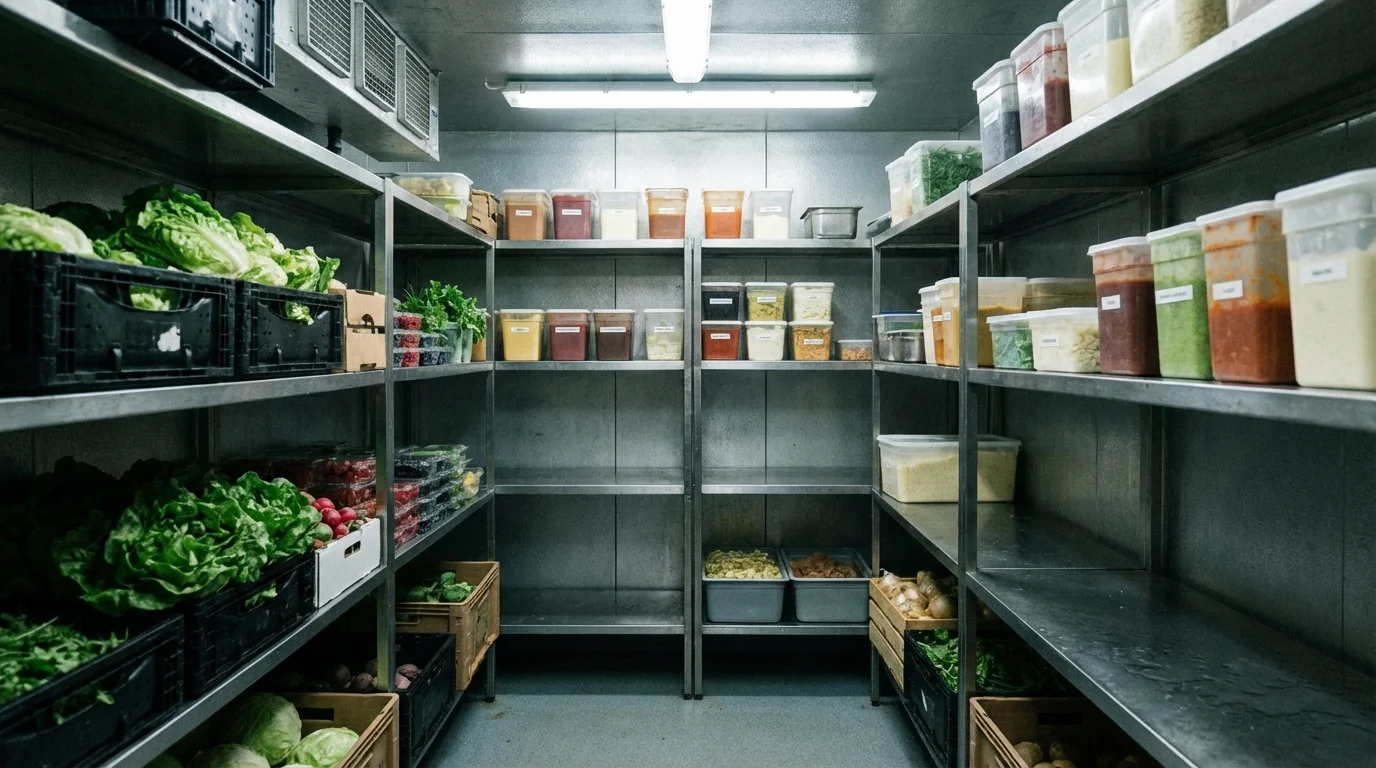
Why your theoretical stock does not match reality
Accounting stock is a mathematical construct: it adds registered entries, subtracts theoretical outputs based on recipe costings and POS sales, and returns a number that should represent what is in each warehouse. In theory, it is a perfect system. In practice, it accumulates errors day after day until the figure on screen has little to do with what is actually on the shelves.
The problem is not the mathematical model. The problem is that the reality of a professional kitchen in operation is far more chaotic than any formula can capture. There are dozens of daily micro-events that the accounting system does not record and that, accumulated, generate a growing gap between the two worlds.
Unregistered waste and unknown loss
In any food service operation, a percentage of product is lost between reception and the final dish: fish cleaning, meat trimmings, fruit that ripens too quickly, damaged packaging in storage. When those losses are not systematically recorded in the system, the accounting stock continues counting product that no longer exists. In chains with high staff turnover, waste logging is the first thing to be abandoned.
Portion drift
The recipe costing says a burger uses 180 grams of meat. In practice, the night shift cook uses 200 because the portion looks too small. Multiplied by 120 burgers per day at one location, that is 2.4 extra kilos of meat per day the system does not deduct. In a chain of 20 locations, that small deviation can amount to over a tonne per month of unrecorded consumption.
Undocumented transfers between locations
It is Friday night and the city center location is short on mozzarella for service. The manager calls the southern zone location, which has surplus, and sends a driver with 10 kilos. Nobody records the transfer in the system. The receiving location has more stock than the system shows; the sending one has less. The chain as a whole still has the same total volume, but per-center visibility collapses.
Short deliveries from suppliers
The supplier order was for 50 kilos of chicken breast. The delivery note says 50 kilos. But if nobody weighs the goods at reception, it is impossible to know whether 50 or 47 actually arrived. In hand-transcribed delivery notes, quantity discrepancies go unnoticed. By month-end, those three kilos difference per delivery accumulate into a significant deviation nobody can explain.
Incorrect unit conversions
A supplier invoices olive oil by the liter. The recipe costing measures it in grams. The purchasing system records it in 5-liter cases. If the conversion table is not perfectly calibrated, every stock movement introduces a small rounding error that amplifies with volume and frequency of operations.
Fourteen kilos of salmon vanished. No waste record, no transfer, no incident. Accounting stock and real stock simply live in parallel universes.
The cost of inventory blindness
When inventory lies, everything built on it also lies. Suggested orders are calculated on fictitious stock, generating over-purchasing at some locations and stockouts at others. Recipe costings show a theoretical food cost that does not reflect real consumption. Monthly closing reports present figures that do not match the cash register, and the finance team spends entire days searching for explanations that never come.
But the most serious impact is not immediately financial: it is the loss of decision-making capability. If you cannot trust your stock data, you cannot optimize purchasing. If you cannot optimize purchasing, you cannot control food cost. And if you cannot control food cost, every new location you open further dilutes the group's margin.
Data measured in active Controliza clients.
How does Controliza reconciles real and accounting stock?
Controliza's Purchasing module attacks the problem at its root: instead of trusting a theoretical stock that degrades over time, it builds real stock from verified data at every point in the operational flow.
Automatic verification at every point
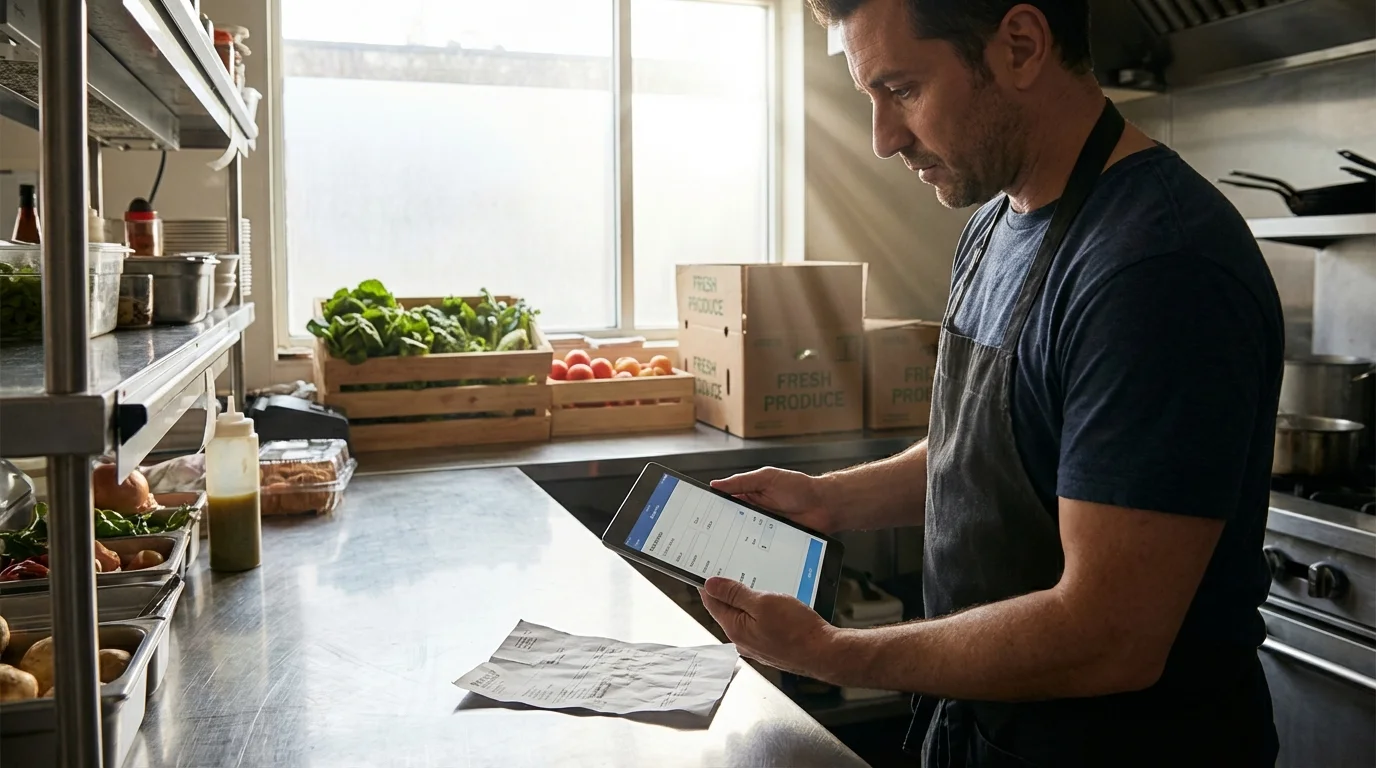
Controliza automatically cross-references each digitized delivery note with the original order and contract terms, eliminating discrepancies before they accumulate.
Verified entries with OCR on every delivery note
Every time a location receives goods, the delivery note is digitized via intelligent Trazoon. The system extracts quantities, unit prices and product references, and automatically cross-references them with the original order and supplier contract terms. If the delivery note says 50 kilos but the order was for 55, the discrepancy is recorded instantly. Stock entries stop being an act of faith and become verified data.
Outputs calculated from production records
Controliza connects ingredient consumption with production records and POS sales. When a burger is sold, the system deducts exactly the 180 grams of meat specified in the recipe costing. When the kitchen team logs a base sauce production, the ingredients used are automatically subtracted from stock. This real consumption calculation, fed by the Forecast module, replaces manual estimates with traceable data.
Multi-location comparison dashboards
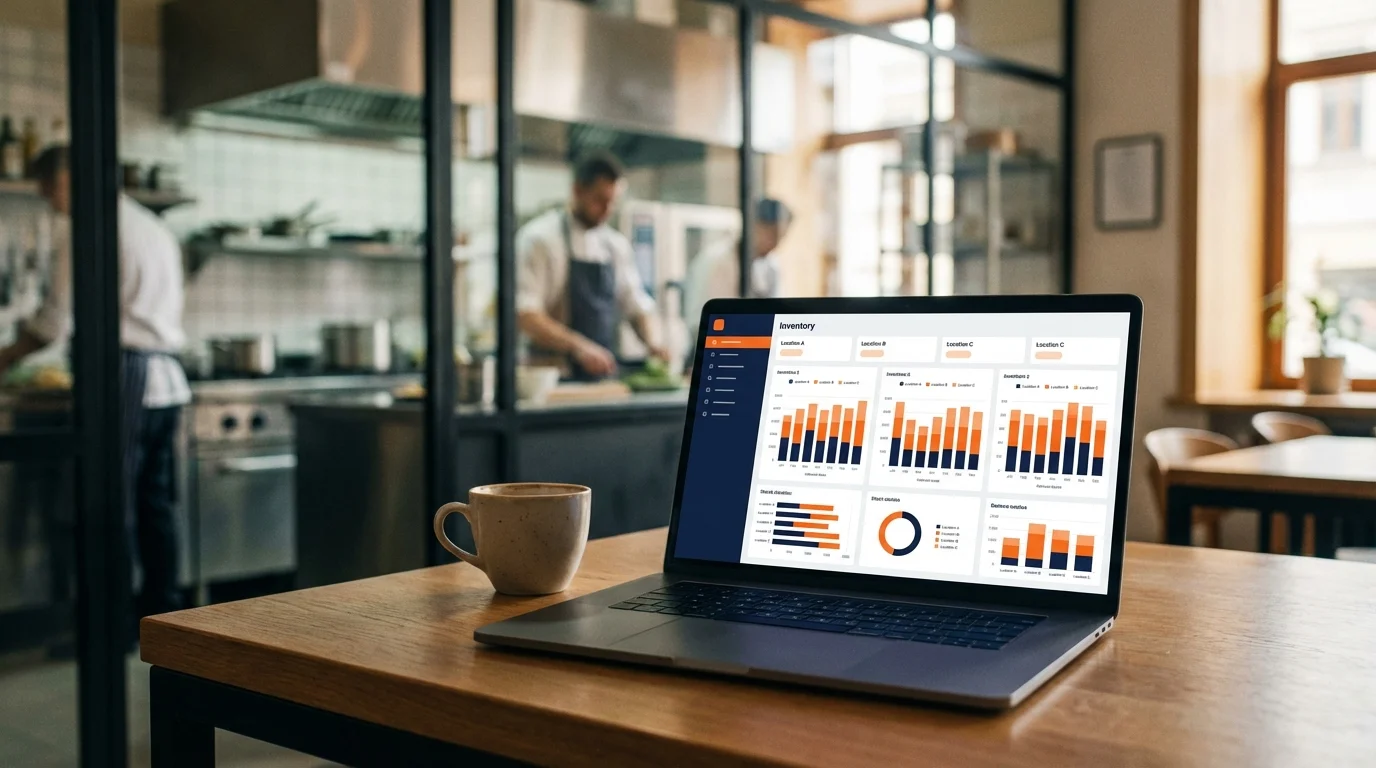
One of the biggest challenges for HORECA chains is cross-visibility. Controliza displays the stock of all group locations in a single panel, with deviation indicators between accounting stock and real stock by center, product category and period. If the Malaga location shows a 12% deviation in proteins while Seville is at 3%, the system flags it immediately for the operations team to investigate.
Automatic alerts on deviation thresholds
The purchasing team can define tolerance thresholds by product category. When the difference between accounting stock and the latest physical count exceeds that threshold, Controliza generates an alert to the center manager and the operations director. There is no need to wait for the monthly close or quarterly inventory to discover something does not add up: deviation is detected in real time.
Do you know how much your real stock deviates from your accounting stock?
Discover how Controliza's Purchasing module automatically reconciles your inventory with data verified by Trazoon on every delivery note. Request a personalized demo and see the impact on your chain.
How does to turn inventory into a trusted operational signal?
The real cost of bad inventory is not the missing product itself. It is the chain reaction it triggers in purchasing, production, and margin control. When central does not trust stock data, every replenishment decision becomes defensive: buyers over-order to avoid stockouts, locations hold more safety stock than they need, and waste rises because product expires before service can absorb it. At that point, inventory stops being a management tool and becomes a source of noise that distorts food cost, recipe costing accuracy, and daily decision-making.
To close that gap, you need a stock model built from verified events, not assumptions. That means validated delivery notes at goods reception, unified counting routines, and consumption estimates that reflect actual operating patterns. With Controliza, stock is reconstructed from checked inputs through traceability workflows, guided mobile counts, and predictive consumption from Forecasting. Instead of waiting for month-end surprises, you detect deviations while there is still time to act.
The result is practical and immediate: fewer late stockout detections, faster discrepancy analysis by product and location, and a consolidated view central can actually use. When the same methodology is applied across the chain, inventory stops lying. It becomes a reliable operational signal for purchasing, waste control, and protecting margin.
Measurable impact in real chains
HORECA groups that have implemented automatic inventory reconciliation with Controliza report consistent improvements in the first six months of operation:
The waste reduction alone usually justifies the investment in groups with more than 15 locations. But the most relevant long-term impact is the ability to make purchasing decisions based on real data, not estimates that accumulate weeks of error.
If you want to go deeper, we recommend reading Paper-based inventory counts: the black hole of your HORECA chain.

