Today, food waste in restaurants is one of the biggest challenges facing the hospitality industry. This is mainly due to excess products purchased to prepare a specific dish, inadequate planning of customer numbers, or food waste by diners. This is not only a loss of resources, but also a social responsibility that all restaurants should take seriously.
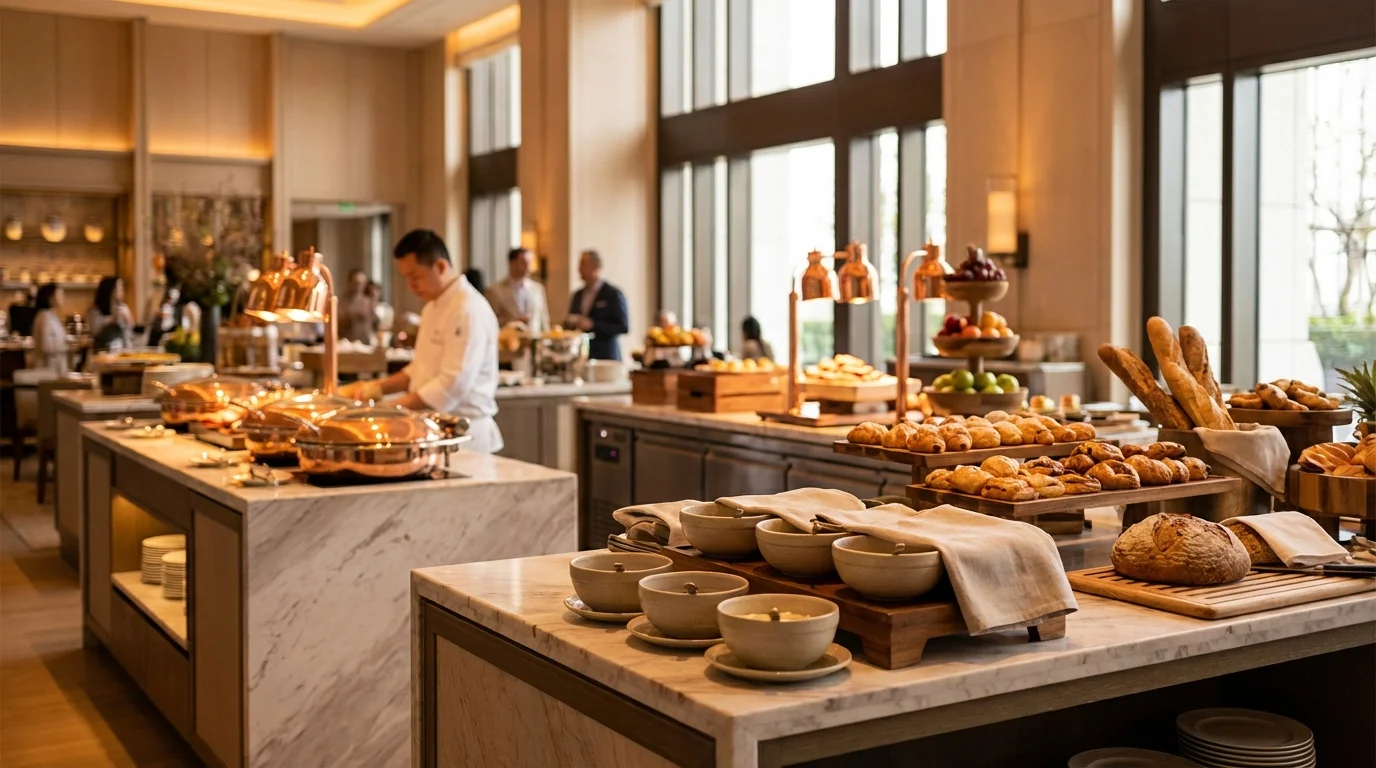
Fortunately, there are many ways to reduce food waste in restaurants. First, restaurant owners and managers can improve their planning when purchasing food for dishes. This means buying only what is needed for customers, thus avoiding purchasing food in excess. Additionally, owners and managers should consider the number of customers they expect to serve each day to prevent waste.
Second, restaurant owners and managers can opt for local and seasonal products. This will not only help them reduce purchasing costs, but will also help reduce food waste since local seasonal products are fresher and of better quality than imported products.
It is also important to foster a culture of waste prevention in restaurants. This means that chefs and waitstaff should educate customers about the importance of waste prevention. For example, they can recommend dishes with fewer ingredients or dishes that can be shared with other diners. They can also offer dishes with ingredients that can be reused or that generate less waste.
Finally, it is important that restaurants employ proper storage strategies. This means that food must be stored properly to maintain its freshness and quality. Additionally, food should be classified and separated to prevent mixing and waste.
In summary, food waste in restaurants is a serious problem that must be taken seriously. Restaurant owners and managers can reduce food waste through better planning when purchasing products, buying local and seasonal products, educating customers about waste prevention, and storing food properly. These measures can help restaurants save time, money and resources, while contributing to reducing food waste.
Controlling waste with real data: from “eyeballing” the buffet to right-sized production
One of the biggest sources of food loss in hospitality isn’t purchasing, but the lack of visibility during service. This is especially common in buffet formats, hotel breakfasts, institutional catering, and high-turnover services, where replenishment is often done “by eye.” The problem is clear: if you don’t know what is actually being consumed, when demand drops during service, and which trays come back with the most waste, you end up overproducing just to avoid running short. That excess can’t always be reused, it throws off your planned recipe costing, drives up food cost, and makes waste traceability harder to manage. On top of that, when records are entered manually at the end of the shift, the information arrives too late, is incomplete, and isn’t useful for making operational decisions. In practice, many teams think they are controlling waste because they log incidents or review stock, but in reality they still aren’t measuring actual consumption by time slot, by item, or by service point.
This is where an operational intelligence layer makes the difference. With Controliza Buffet, consumption and waste stop being estimates and start being measured in real time through computer vision and automatic weighing. This lets you see consumption curves by time slot, detect when staggered production makes sense, and adjust replenishment based on data rather than intuition. Instead of filling the buffet at the start of service “just in case,” you can plan more accurate quantities, replenish only what’s needed, and avoid leaving large volumes of product exposed with no real demand. The impact on operations is immediate: less waste, less overproduction, better use of raw materials, and execution that is more closely aligned with actual demand. In environments where waste was not previously quantified, this shift often translates into waste reductions of 15% to 25% and a 10% to 15% lower cost per cover, because the data allows you to correct both production and replenishment and review recipe costing on an objective basis.
What’s more, measuring waste properly isn’t just about saving money — it also simplifies regulatory compliance and improves day-to-day management. When waste records depend on manual sheets or document reviews at closing time, compliance with the Waste Law becomes just another administrative burden, with information that is hard to audit and of little use for prevention. If, instead, waste is recorded automatically during operations, you can document what was discarded, when, in what quantity, and in what service context, strengthening traceability without adding work for the team. This also helps you identify patterns: items that consistently remain at the end of breakfast, time slots where replenishment happens too early, dishes that look profitable in the recipe costing but generate high actual waste, or specific services where forecasting doesn’t match guest volume. With that information, the conversation stops being “we threw away a lot” and becomes “what specific decisions do we need to change to throw away less tomorrow?”
Reducing food waste in restaurants no longer depends only on buying better or storing correctly, but on connecting production, replenishment, and operational analysis. If you know what is truly being consumed, you can fine-tune purchasing, review delivery notes against actual consumption, adjust recipes and recipe costing, and coordinate the kitchen and front of house more effectively so that every replenishment makes sense. You can even combine this information with Prediction tools to anticipate demand more accurately and prepare service with less uncertainty. Ultimately, wasting less is not just about raising team awareness, but about giving them the visibility to act in time. When operations are driven by real data instead of assumptions, the restaurant gains control, reduces waste, protects margins, and turns sustainability into a tangible business improvement.
Use real-time buffet data to cut waste before it happens
In many restaurants, hotels, and catering operations, waste does not start in the storeroom. It starts during service, when replenishment decisions are made without reliable data. This is especially common in buffets, breakfast services, and high-volume dining, where teams refill trays based on visual estimates instead of actual consumption. The result is predictable: production stays too high for too long, the last service window accumulates the most leftovers, and waste is only discovered when it is too late to correct it. This affects much more than discarded food. It distorts recipe costing, pushes food cost above target, makes traceability records harder to maintain, and creates a gap between what was planned and what was really consumed. When managers rely on manual notes or end-of-shift counts, they lose the opportunity to adjust production in real time.
To reduce waste in this type of operation, you need visibility by time slot, product, and service moment. Knowing total covers is not enough if you do not know how demand behaves throughout the service. A buffet may look busy at the start and slow down sharply later, but if the kitchen continues producing at the same pace, overproduction becomes inevitable. This is where operational intelligence changes the outcome. With Controliza Buffet, vision AI and automatic weighing measure actual buffet consumption in real time, so your team can see what is being served, what is being consumed, and what is coming back as waste. Instead of replenishing “just in case,” you can move to staggered production and data-based refills. Consumption curves by time slot help you decide when to reduce batch sizes, when to stop replenishing certain items, and which dishes systematically generate more leftovers. Across active client data, this approach can reduce waste by 15% to 25% and lower cost per cover by 10% to 15%.
This has practical implications across the entire operation. First, purchasing becomes more accurate because production is aligned with real demand patterns rather than assumptions. Second, recipe costing becomes more reliable because you can compare expected output against actual consumption and waste. Third, kitchen teams work with clearer criteria, which reduces unnecessary last-minute production and improves service consistency. Finally, compliance becomes easier. Instead of treating waste registration as a purely documentary task, Controliza automates waste records and supports better traceability for regulations related to food waste. That means less manual admin, fewer gaps in delivery notes and stock movements, and more useful information for both operations and audits.
If you want to waste less food, you need to stop managing service by intuition alone. Waste reduction is not only about buying better or storing better; it is also about producing the right quantity at the right moment. By combining real-time buffet monitoring with planning tools such as Forecasting, you can connect expected demand with live consumption and adjust before losses build up. This gives you a more controlled operation, better food cost discipline, and a stronger foundation for continuous improvement. In short, when you can measure consumption as it happens, you can prevent waste instead of just recording it after the fact.

