Hospitality is evolving rapidly, and the key to staying competitive is AI-powered digitalization in hospitality. Integrating artificial intelligence into hospitality management enables businesses to optimize processes, reduce costs, and improve the customer experience. Events like HIP - Horeca Professional Expo 2025 at IFEMA MADRID reinforce the importance of adopting innovative technology in the sector.
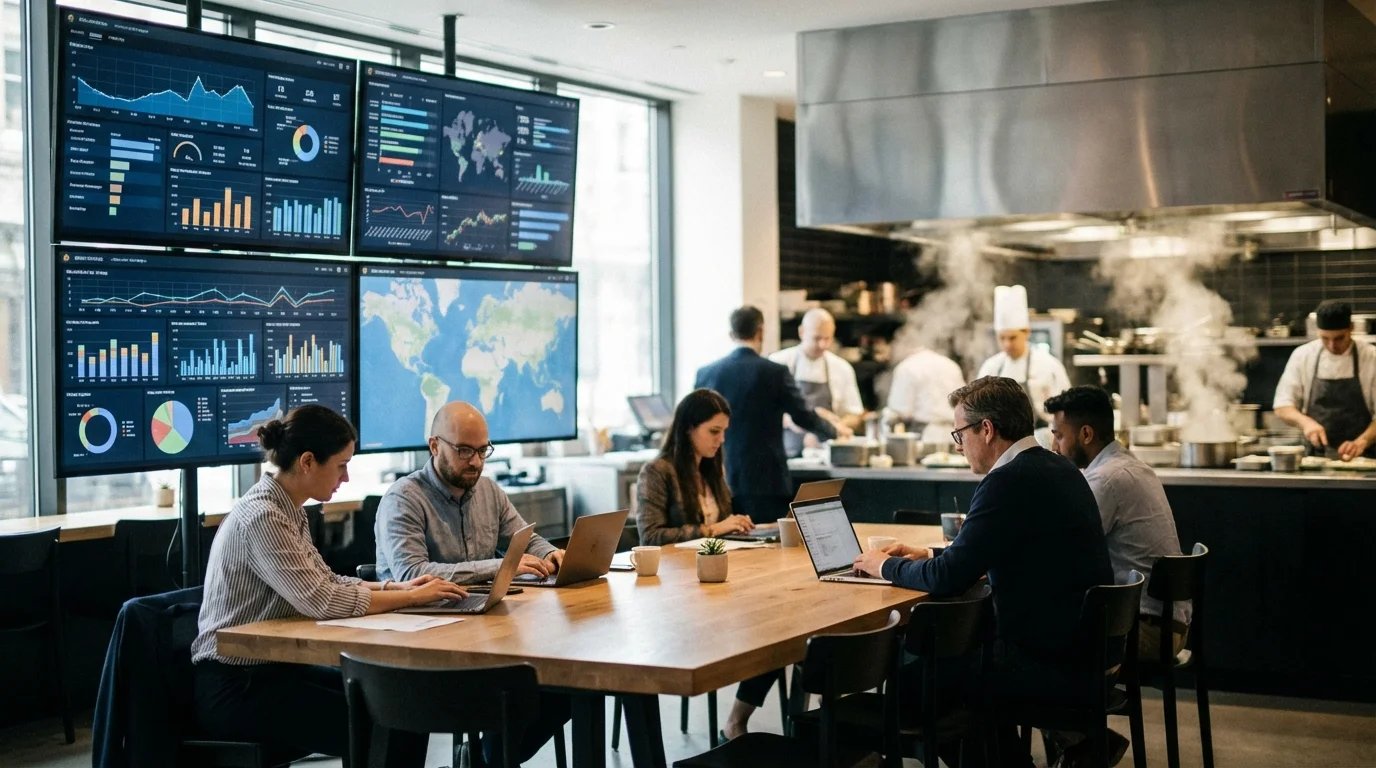
Controliza was present at HIP 2025 at stand D7463.
Why Is AI-Powered Digitalization in Hospitality Essential?
In Spain, the hospitality sector represents 27% of GDP, contributing 375 billion euros and generating 7 million jobs. Digital transformation is no longer optional but a necessity to improve profitability and operational efficiency.
Some key benefits of implementing AI in hospitality include:
- Purchasing optimization and stock control through data-driven predictions.
- Centralized management of multiple locations in real time.
- Automation of administrative and operational processes.
- Reduction of food waste and improved sustainability.
Key Trends in AI-Powered Hospitality Digitalization
1. AI for Demand Forecasting and Smart Purchasing
AI analyzes consumption data, weather, market trends, and purchasing patterns to predict demand with precision. This allows restaurants and hotels to optimize purchasing, avoiding both overstock and shortage of essential products.
2. Real-Time Integrated Business Management
Thanks to AI-powered digitalization in hospitality, it is now possible to monitor and manage multiple locations from a single control panel. This streamlines decision-making, improves internal communication, and allows rapid action in response to any incident.
3. Administrative Process Automation
AI systems can manage reservations, orders, and invoicing automatically, reducing errors and freeing up staff time so they can focus on improving the customer experience.
4. Waste Reduction and Profitability Improvement
Food waste is a recurring problem in hospitality. AI helps predict consumption, optimize inventories, and minimize losses, thereby improving profit margins and contributing to more sustainable management.
Controliza: Your Partner in AI-Powered Hospitality Digitalization
At Controliza, we offer innovative solutions that will help you boost the efficiency and profitability of your hospitality business.
Learn more about AI-powered digitalization in hospitality on our website: www.controliza.com
From scattered data to profitability: how to apply AI for real in HORECA operations
The biggest problem in hospitality is usually not a lack of information, but having it fragmented across too many places and making decisions too late on the issues that impact margin. Purchasing in one place, inventories in another, outdated recipe costing, delivery notes not validated on time, stock discrepancies no one spots until month-end, and traceability that depends more on team discipline than on a reliable system. In HORECA chains and multi-site businesses, this lack of coordination leads to a very familiar pattern: over-ordering in some locations, stockouts in others, invisible waste, food cost deviations that are hard to explain, and operations that consume hours of supervision without guaranteeing real control. AI creates value when it stops being a generic concept and becomes operational intelligence connected to day-to-day activity: what to buy, how much, for which site, based on what consumption forecast, and with what expected impact on cost and waste.
That is where an integrated platform makes the difference. Instead of working with disconnected tools, Controliza connects purchasing, inventory, production, buffet, traceability, and forecasting in a single shared data environment. That means demand forecasting does not stay in a nice-looking dashboard, but feeds specific purchasing and production decisions. If you want to stay ahead of actual consumption, the Forecasting module combines historical patterns, operations, and site-level behavior to fine-tune requirements more accurately. When that data is connected to purchasing and inventory, you can detect deviations before they become a structural problem: orders above consumption, categories with recurring waste, slow-moving items, or gaps between theoretical recipe costing and actual consumption. The result is not just greater visibility; it is a tangible improvement in operational control that helps reduce food cost by 3% to 5%, cut waste by more than 20%, and speed up return on investment within 3 to 6 months.
In practice, this changes how you manage each business unit and how you oversee the chain as a whole. A purchasing manager no longer works on instinct or urgency, but validates orders with context: forecast, available stock, consumption, incidents, and supplier terms. Operations can compare sites using consistent criteria and identify why one location is deviating on cost, why another is generating more waste, or why one product family is putting pressure on margin. The kitchen gains consistency because recipe costing, production, and ingredient usage are aligned with operational reality. And administration reduces friction by automating the reading and validation of delivery notes, avoiding manual errors, duplicates, and time lost on low-value tasks. In addition, traceability stops being a reactive process and becomes a permanent layer of control, something especially relevant in high-volume environments with multiple suppliers and growing food safety requirements. When all of this runs on the same database, decisions stop depending on chasing information and start focusing on correcting deviations and protecting margin.
AI-driven digitalization in hospitality, therefore, is not just about automating tasks, but about building an operating system capable of turning disconnected data into profitable actions. For a HORECA chain, this has direct implications: standardizing processes without losing flexibility at site level, scaling with control, reducing dependence on spreadsheets, and reacting faster to changes in demand, supplier issues, or cost variations. Controliza is designed precisely for that scenario, with integrated products covering everything from purchasing and inventory to kitchen, buffet, traceability, and CAPEX, always under a shared logic of operational intelligence. The real value appears when you can quickly answer questions that affect the business every day: where margin is being lost, which sites need purchasing adjustments, which items are generating waste, which recipe costing sheets need review, and which decisions will have the most immediate impact on profitability. That is the difference between digitizing isolated processes and managing strategically with AI: moving from firefighting to running operations with judgment, visibility, and control.
From scattered data to profitability: how to apply AI for real in HORECA operations
The biggest problem in hospitality usually isn’t a lack of information, but having it fragmented across ERP systems, Excel files, POS, emails, paper delivery notes, and systems that don’t talk to each other. When purchasing, inventory, production, and sales don’t share the same data, hard-to-detect discrepancies start to appear: outdated recipe costing, stockouts, invisible waste, receiving errors, and decisions made too late. The consequence is clear: food cost goes up, margins go down, and traceability becomes more complex հենց when you need it most.
Applying AI in a useful way isn’t about adding another layer of complexity, but about connecting day-to-day operations to turn scattered data into actionable decisions. That’s where Controliza makes the difference: an AI-powered operational intelligence platform designed for HORECA chains, where purchasing, inventory, kitchen, buffet, traceability, and forecasting all work from shared data. With solutions like Forecasting and Purchasing, you can anticipate demand, adjust orders, validate actual consumption, and detect discrepancies before they impact your bottom line.
In practice, this means you can compare what was sold with what was consumed, review whether your recipe costing reflects operational reality, control waste by site or category, and automate the reading and validation of delivery notes to reduce administrative errors. In addition, by integrating inventory and production, you improve end-to-end traceability and gain visibility into what’s happening at each location without relying on manual closing processes or delayed reports.
The result isn’t just more control, but greater profitability. With a well-focused implementation, Controliza helps reduce food cost by 3% to 5%, cut waste by more than 20%, and achieve a positive ROI in 3 to 6 months. If you manage multiple locations, digitizing with AI is no longer about having more data, but finally having a single source of truth so you can make better decisions, faster.
AI Digitalization for Collective Catering: Better Control Under Tight Margins
In collective catering, the challenge is not only serving high volumes but doing it with tight budgets, fixed menu cycles, and strict compliance requirements. When purchasing, recipe costing, delivery notes, and traceability are managed separately, food cost drifts, waste increases, and teams spend too much time reacting instead of controlling operations.
Controliza connects these processes in one operational layer. With Forecasting, demand planning adapts to cyclical menus and real consumption patterns, helping you buy with more precision and reduce avoidable waste. At the same time, integrated reception and traceability controls make it easier to validate delivery notes, detect deviations early, and maintain APPCC records without adding manual workload.
The result is more consistent execution, faster decision-making, and better margin protection. You gain visibility over what is being purchased, received, produced, and wasted, so you can act before small operational issues become recurring losses.
Conclusion
AI-powered digitalization in hospitality not only optimizes operations but also improves the customer experience and maximizes profitability. Artificial intelligence is the future of the sector, and adopting it now will keep your business competitive and prepared for tomorrow's challenges.
Want to learn more about integrating AI into your business? Contact us at Controliza.
