Your restaurant chain no longer sells only through dine-in. Between Glovo, Uber Eats, Just Eat, the takeaway counter and catering services, each location operates as a multichannel business. Yet the vast majority of HORECA groups still produce a single total sales forecast per location, as if all those channels behaved the same. They do not. And that simplification is destroying the accuracy of your purchasing, your mise en place and your bottom line.
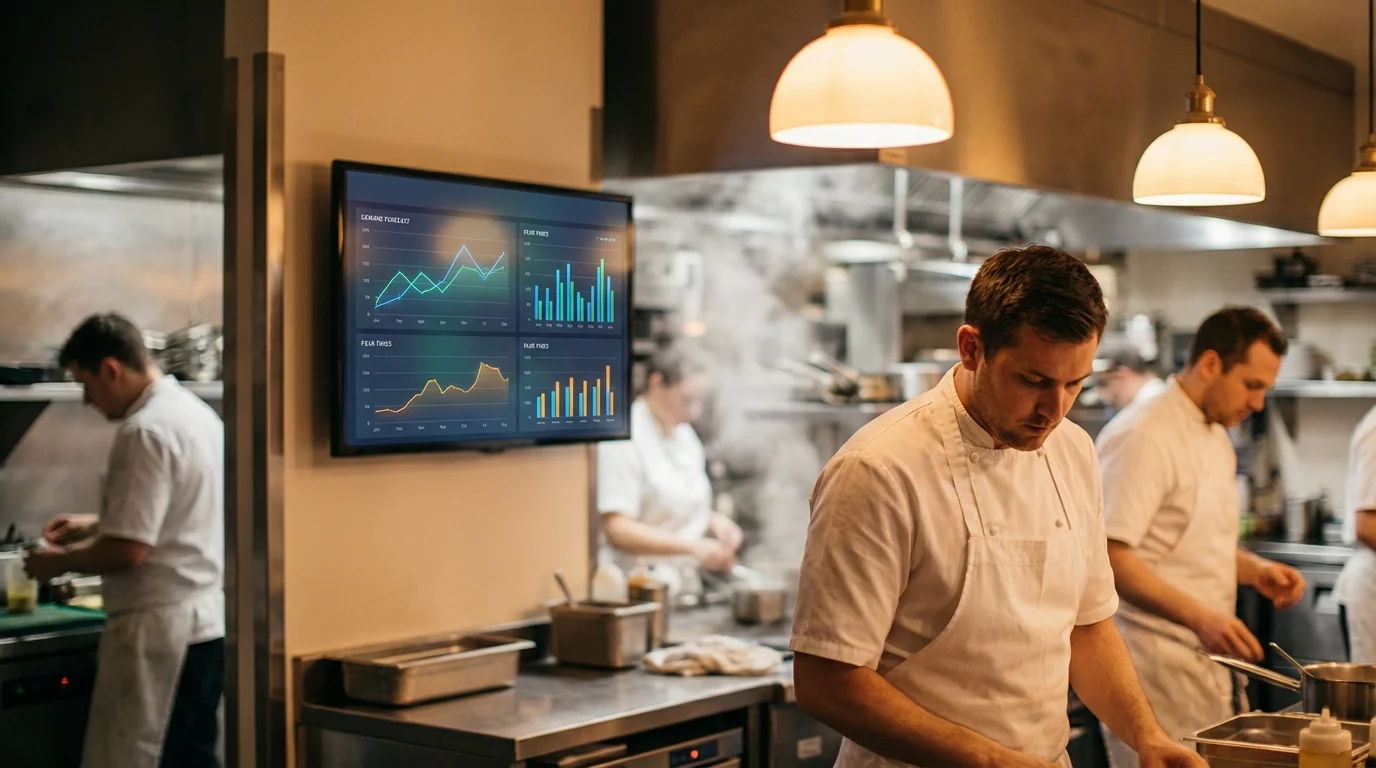
The multichannel reality of the modern restaurant
Ten years ago, forecasting restaurant demand was relatively simple: one sales channel, one type of customer, one behavior pattern. Today, a 20-location chain can receive revenue from four or five channels simultaneously, each with completely different dynamics.
Dine-in remains the primary channel in most locations, but delivery can represent between 15% and 40% of revenue depending on the location and concept. Takeaway is growing steadily, especially in office districts with reduced lunch hours. And some groups add corporate catering or dark kitchens that operate on their own rhythms.
The problem appears when all this complexity is compressed into a single number: "total location sales." From that aggregated number, the forecast is calculated, purchasing is sized, production is planned and staff is scheduled. And that number, by definition, is wrong for each individual channel.
Why aggregating channels destroys the forecast
Each sales channel has its own demand profile. Dine-in shows clear peaks at 2:00 PM and 9:00 PM. Delivery, on the other hand, starts earlier: orders begin rising at 1:00 PM, peak at 1:30 PM and decline before dine-in. At night, delivery activates at 8:00 PM and concentrates the bulk of volume in just 45 minutes.
When you sum dine-in, delivery and takeaway into a single number, the result is a smoothed curve that does not reflect the reality of any channel. You forecast 120 covers for lunch when in reality you have 80 dine-in and 50 delivery, with peaks at different times and different menu compositions.
Channel-specific behaviors
Delivery: the most externally sensitive channel
Delivery reacts disproportionately to variables that barely affect dine-in. A rainy day can increase delivery orders by 30-50%, while dine-in dips slightly. Platform promotions (Glovo coupons, Uber Eats discounts) create one-off demand spikes with no correlation to dine-in behavior. Moreover, the product mix is different: delivery customers tend to order travel-friendly dishes like bowls, burgers and pizzas, and fewer fresh leaf salads or plated dishes that lose presentation.
Takeaway: the weekday lunch channel
Takeaway concentrates its demand in the weekday lunch slot. On weekends its weight drops dramatically versus dine-in. It has a lower average ticket, high sensitivity to the daily menu offering and a strong correlation with the area's work activity.
Dine-in: the most predictable channel, but not immune
Dine-in has more stable patterns but responds to different variables: prior reservations, local events, weather (terraces empty in cold weather) and tourist seasonality. Its menu mix includes a higher proportion of starters, desserts and beverages than delivery, directly affecting ingredient forecasts.
How does Controliza solves multichannel forecasting?
Controliza's Forecast module builds independent models per channel and per location. It is not about dividing the total by channels with a fixed percentage: each channel has its own machine learning model with its own input variables.
Separate models with specific variables
The delivery model incorporates variables that do not affect dine-in: detailed weather forecasts, delivery platform promotional calendars, order history by 15-minute slots, and local search trends. The dine-in model incorporates reservation data, local events and tourist occupancy.
Intelligent consolidation for purchasing
Although each channel has its independent forecast, the system consolidates total ingredient demand to generate a unified purchasing order. If the delivery model forecasts 60 burgers and dine-in forecasts 25, the meat order is calculated on 85 exact units, not on a fuzzy estimate of "total servings."
How does Controliza solves multichannel forecasting?
Controliza’s Forecasting module builds independent models for each channel and each location. It’s not about splitting the total across channels using a fixed percentage: each channel has its own machine learning model with its own input variables.
Separate models with channel-specific variables
The delivery model includes variables that do not affect dine-in: detailed weather forecasts (rain increases delivery demand, good weather reduces it), promotional calendars from delivery platforms, historical order data by 15-minute time slot, and local search trends. The dine-in model includes reservation data, local events, and tourist occupancy. Each model learns from the actual behavior of its channel, not from an average distorted by the others.
Smart consolidation for purchasing
Although each channel has its own independent forecast, the system consolidates total ingredient demand to generate a single purchasing order. If the delivery model forecasts 60 burgers and the dine-in model forecasts 25, the order to the meat supplier is calculated based on exactly 85 units, not on a vague estimate of “total portions.” This ingredient-level consolidation based on channel forecasts is what makes it possible to buy exactly what you need.
Kitchen planning by channel and shift
The segmented forecast feeds the kitchen production plan. The head chef receives a detailed mise en place breakdown: what to prepare for the delivery line (which starts earlier), what to have ready for dine-in (which requires different plating), and what to set aside for takeout. This makes it possible to schedule production with staggered start times and assign staff to each line efficiently.
The operational benefit of segmentation
Separating forecasts by channel not only improves forecast accuracy. It transforms how the operations team understands each location. When you can compare delivery performance across locations, or spot that one site has take away sales 40% below the average with no apparent reason, you uncover growth opportunities that the aggregated figure was hiding.
Channel segmentation also helps you negotiate better with delivery platforms, detect whether a Glovo promotion is cannibalizing dine-in sales, and decide whether it makes sense to invest in the take away line of a specific location. These are strategic decisions that can only be made with granular data.
Why channel mix errors end up as waste, stockouts and distorted food cost
The real damage of mixing channels does not stay in the forecast. It shows up a few hours later in your kitchen, your purchasing and your margins. If you plan from one blended sales figure, you buy and produce the wrong things at the wrong time. You may have enough total volume on paper, but not the right dish mix, prep sequence or packaging needs for the channel that actually drives demand. That is how a location ends lunch with excess mise en place for dine-in, missing components for delivery, and a food cost report that looks worse than expected without a clear operational reason.
This happens because channels do not just change volume. They change consumption patterns at ingredient level. Delivery often pushes higher demand for items with strong transport performance, more modifiers, more sauces, more disposable packaging and faster replenishment cycles. Dine-in may concentrate premium dishes, add-ons and desserts with a different prep burden. Takeaway can create short, intense windows that require speed and availability rather than broad menu readiness. When those patterns are merged, recipe costing becomes less reliable, purchasing loses precision, and waste increases because the kitchen prepares for an average demand profile that never truly arrives. The result is familiar: overproduction in some SKUs, stockouts in others, rushed substitutions, and weaker traceability if teams start improvising outside the planned flow of delivery notes and stock movements.
This is where Forecasting in Controliza changes the operating model. Instead of producing one generic forecast per location, Controliza predicts demand by dish, day and location, incorporating external drivers such as weather, holidays, local events and hotel occupancy. That level of granularity lets you translate forecast into action: more accurate mise en place, better thawing plans, tighter purchase orders and cleaner production targets for each service window. In practice, chains using this approach reduce waste by 20-30%, cut stockouts by up to 40% and keep production deviation versus real demand below 10%.
More importantly, segmented forecasting gives you a cleaner base for every downstream process. Purchasing can align quantities with the real channel mix. Operations can validate whether delivery promotions justify extra prep. Finance gets a more realistic read on food cost because actual consumption is compared against a forecast built on how guests really buy, not on a blended average. And because projected demand is tied to products and ingredients, stock movements, delivery notes and traceability records stay consistent with what was actually sold. That is the difference between seeing channels as revenue sources and managing them as distinct operational realities.
What impact does it have on margin?
Data measured in active Controliza clients.
If you want to go deeper, we recommend reading Coffee & Bakery: 100% perishable product, 100% essential forecasting and The group of 40 that broke your forecast: AI exception management.

