The warehouse of a 280-room hotel holds over 400 references of fresh, refrigerated and frozen products. Somewhere at the back of a cold room, behind the boxes that arrived yesterday, there is a pallet of yogurts whose expiry date passed three days ago. Nobody knows. The morning shift cook will take the yogurts from the front -- the newly arrived ones -- because they are easier to reach. The ones at the back will stay there until someone discovers them during the next stock count. When they find them, they will go straight to the bin: product that was bought, stored, refrigerated for days, and never served.
Why manual FIFO does not work in multi-location chains
FIFO -- First In, First Out -- is the most basic warehouse management principle in food service: what arrives first gets used first. In theory, it is straightforward. In practice, in a professional kitchen with high product turnover, multiple daily deliveries and staff that changes every season, FIFO becomes an aspiration that nobody verifies.
The fundamental problem is that manual FIFO depends on two things that are scarce in hospitality: consistent staff discipline and visibility of expiry dates. When a supplier delivers 20 boxes of product at 7:00 AM and the receiving team has 15 minutes to stow everything before service starts, the priority is getting the goods into the cold room, not reorganizing shelves so that older items are in front.
The "box at the back" effect
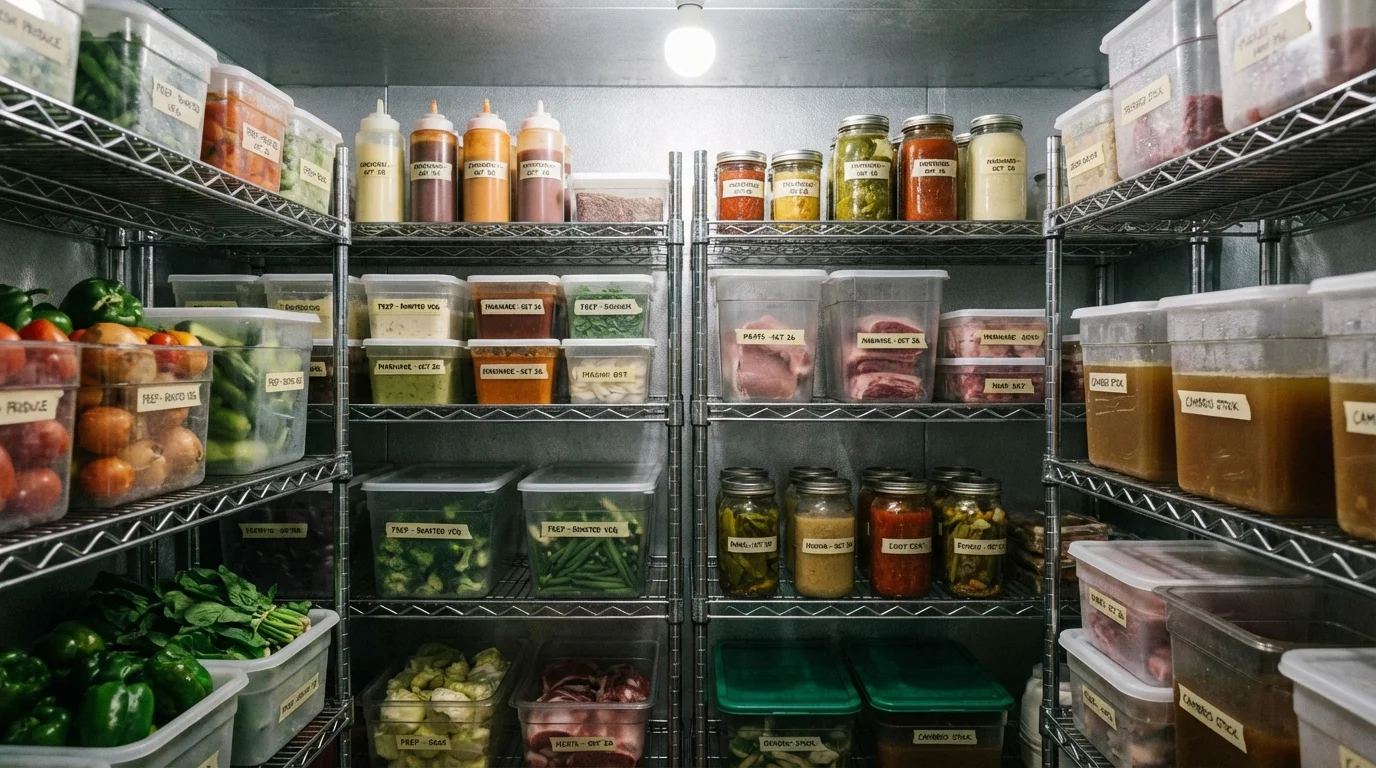
In high-density warehouses, older boxes naturally migrate to the back and bottom of shelves. New deliveries are placed in front because it is faster and because the space demands it. Nobody checks the dates at the back until the smell gives it away. In freezer rooms, where product can remain for months, the effect is amplified: items past their best-before date occupying space and consuming energy without anyone detecting them.
Staff turnover: the warehouse's memory is lost
In hospitality, staff turnover exceeds 40% annually. Every time a warehouse manager leaves, they take with them the implicit knowledge of where everything is, which product has an approaching expiry date, and which supplier tends to deliver with a short shelf-life margin. The replacement starts from zero, without a mental map of the warehouse, and FIFO breaks for weeks until the new employee learns the warehouse dynamics.
Multi-location: the problem multiplies by N
In a chain with 15 locations, the operations director cannot physically verify whether each warehouse respects FIFO. They have no visibility of expiry dates per center, do not know which location has product about to expire, and cannot redistribute stock between locations before it expires. Each warehouse is a black box where expiry dates are managed -- or not managed -- completely autonomously.
What expired product costs (and what goes unseen)
The direct cost of expired product is easy to calculate: it is the purchase price of every item that goes to the bin. But there are hidden costs that multiply the real impact:
Opportunity cost
Expired product is product you bought, stored and refrigerated without any return. Every euro invested in goods that expire is a euro that generated no sales and no margin. In chains with purchasing volumes exceeding 200,000 EUR per month, a 2% expiry waste rate represents 4,000 EUR/month -- 48,000 EUR per year -- that disappear without generating a single served dish.
Food safety risk
Expired product that is not detected in time does not always end up in the bin. Sometimes it ends up on the plate. A dairy product one day past its date probably will not cause problems. But a fresh product three days past its date in a kitchen preparing 400 covers daily is a real health risk. If a health inspection finds expired product in your cold rooms, the fine can exceed 5,000 EUR per location, and the reputational damage is incalculable.
HACCP non-compliance
The HACCP plan requires documented control of expiry dates for all stored products. In a manual system based on adhesive labels and visual checks, compliance depends on someone remembering to check every shelf every day. In an audit, the question is not whether the product is in date: it is whether you can prove you verify dates systematically. Without a digital record, that proof is impossible.
Data measured in active Controliza clients.
How does Controliza automates expiry date control?
The Inventory module of Controliza records the expiry date of each batch from the moment of reception and generates automatic alerts before the product expires, allowing redistribution or prioritized consumption before it is too late.
Expiry date registration at reception
When a location receives goods, the Trazoon system automatically extracts expiry dates from the delivery note and associates them with each batch. If the delivery note does not include the date, the warehouse manager enters it from the mobile app during reception. From that moment, the system knows the expiry date of every stock unit in every location of the group.
Configurable preventive alerts
The operations director defines alert thresholds by product category: 7 days for fresh, 30 days for frozen, 14 days for refrigerated. When a batch approaches the configured threshold, Controliza generates an alert to the location manager and the purchasing director. The alert does not just say "this product expires soon": it indicates the affected quantity, the location where it is, and suggests actions -- prioritize consumption, transfer to another center, or include in the daily menu.
Multi-location expiry date visibility
A centralized panel shows all upcoming expiry dates across all group locations, organized by urgency. The operations director sees at a glance which locations have product expiring this week, which categories are most affected, and which trends recur. If a location systematically accumulates dairy expiry waste, perhaps they are ordering too much or receiving with a short margin from the supplier.
Digital FIFO rotation
The system automatically sorts stock by expiry date and prioritizes consumption of the oldest product in production orders and picking lists. When the kitchen team checks the ingredient list for the day's production, the system tells them which batch to use first. FIFO stops depending on the cook's memory and becomes an automatic system instruction.
Do you know how much product expires each month in your chain?
The Inventory module of Controliza records every expiry date from reception and alerts before the product expires. Request a personalized demo and discover how much you can recover.
Measurable impact in real chains
HORECA groups that have implemented automated expiry date control with Controliza reduce expired product waste from the very first weeks:
Expiry date control does not operate in isolation: it integrates with purchasing management to adjust order volumes to each location's actual consumption capacity. If a center has a history of high expiry waste in a category, the system automatically reduces the suggested quantity in the next order. Prevention starts at the purchase, not at the warehouse.
If you want to go deeper, we recommend reading Stock Control in Hospitality: Improve Your Profitability.

