In restaurant management, many factors influence results, but if there is one that makes a direct difference, it is inventory turnover. This indicator, often overlooked, determines not only how efficiently we manage our stock, but also our profitability and quality of service.
Throughout our experience, we have learned that paying attention to this metric allows us to make smarter purchasing decisions, avoid waste and always keep fresh products in the kitchen. Inventory turnover is not a luxury, it is a necessity if we want to stay competitive.
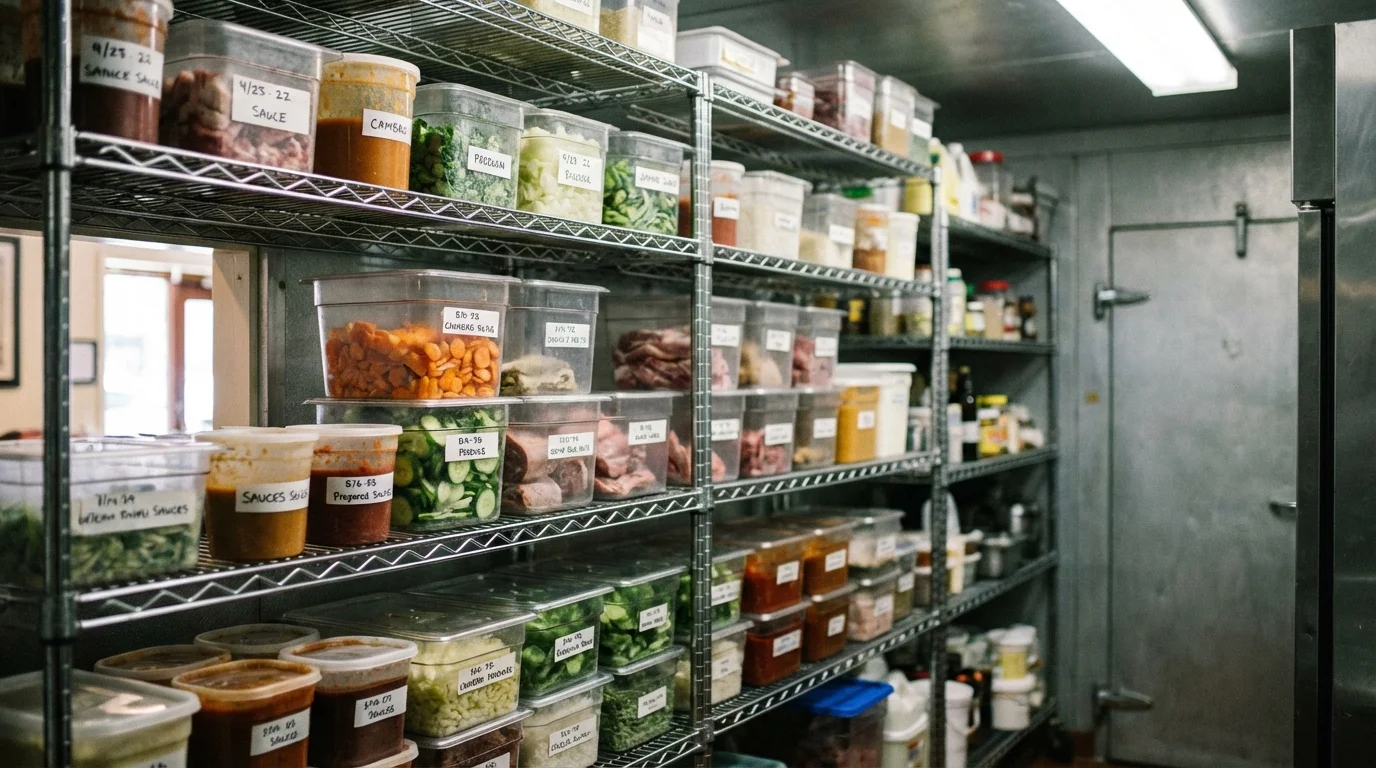
What is inventory turnover and why does it matter?
Inventory turnover measures how many times we renew our stock in a given period. In other words, it indicates the speed at which we use and replenish our products. A high rate means products move quickly; a low one means they are accumulating.
We are clear: inventory turnover is a key factor for a restaurant's efficiency and profitability. By understanding and improving turnover, we have managed to reduce costs, improve product quality and optimize stock management.
How to calculate inventory turnover
We apply a simple formula:
Turnover = Cost of Goods Sold (COGS) / Average Inventory
This figure can be calculated monthly, quarterly or annually. The most interesting thing is not just obtaining the number, but tracking its evolution and comparing it across periods, categories or even locations if you manage multiple outlets.
Good turnover varies by restaurant type, but generally speaking, if a product takes too long to leave the warehouse, it is time to review purchasing, demand and possible leakage.
What benefits have we achieved by improving turnover?
Since we incorporated this indicator into our daily routine, we have noticed clear improvements:
- Less waste of perishable products.
- Savings on storage costs.
- Better purchasing planning.
- Consistent dish quality, by always working with fresh product.
- Optimized cash flow, by not having money "trapped" in stock that does not move.
These results are a direct consequence of applying concrete measures, such as tighter purchasing policies and more rigorous inventory tracking.
Strategies we use to improve inventory turnover
For us, improving inventory turnover is not theory, it is a routine. These are some of the practices we apply:
1. Applying the FIFO method
The First In, First Out principle is essential for keeping products fresh and avoiding waste. We apply it in the kitchen, cold rooms and warehouses alike.
2. Digitizing management
With Controliza's ordering and delivery note app, we control the flow of products from receipt to consumption. This allows us to know real inventory at all times and quickly detect products with low turnover.
3. Analyzing reports and alerts
We use stock control tools for hospitality that generate automatic alerts when a product has been in inventory too long. This way we can act in time and prevent deterioration.
4. Adjustments to recipe costings
We periodically review our kitchen recipe costings. If a product has low turnover, we analyze whether we can integrate it better into existing recipes or create new dishes that include it.
How to turn inventory turnover into a daily operational decision
The problem usually isn’t not knowing the turnover formula, but not having reliable data to act on. In many restaurants, theoretical inventory doesn’t match actual inventory: inbound deliveries go unrecorded, delivery notes are posted incorrectly, counts are incomplete, and consumption doesn’t reflect either sales or real waste. When that happens, turnover stops being a useful KPI and becomes a false sense of control. You think you’re buying well, but product keeps piling up. You think stock is low, but you only spot the stockout once it’s already affecting service. And you think food cost is on target, when in reality it’s drifting because of underlying errors. If the information isn’t consistent, any decision on purchasing, recipe costing or replenishment comes too late or is made with too much guesswork.
That’s why, for inventory turnover to be truly useful, it has to be built on verified data and a single methodology. That’s where Controliza Inventario changes the way you work: actual stock is fed by validated entries from delivery notes, estimated consumption through Predicción, and guided counts from the mobile app, so every movement is traceable and can be reviewed. This lets you see which products are moving too slowly, which ones are close to stockout, and which categories are tying up the most working capital. Instead of reviewing scattered spreadsheets or waiting until month-end, you can act during operations: adjust orders, redistribute product between locations, correct recipe costing deviations, and identify earlier the items generating the most waste. When head office trusts the data, the conversation stops being “I think we have too much” or “it seems like we’re short” and becomes “this product is losing turnover and we need to act today.”
On top of that, analyzing turnover at this level of detail has practical implications that go far beyond the storeroom. Sustained low turnover can point to an oversized menu, purchasing disconnected from real demand, or outdated recipe sheets. It can also reveal execution issues: inconsistent portions, unrecorded substitutions, or product that comes in correctly through purchasing but is lost during handling. If you cross-check turnover with sales, waste and recipe costing, you start to see where margin is being quietly eroded. And that’s key to protecting profitability without affecting the customer experience. It’s not just about selling faster, but about buying better, storing better, and consuming with more discipline. In practice, teams that work this way reduce waste, improve product availability, and gain much tighter control over food cost, even in high-variability operations.
The real advantage lies in turning a historical KPI into a forward-looking management tool. With a consolidated view by product, category and location, you can detect patterns before they become an operational problem: SKUs that are slowing down, families with excess stock, or outlets where turnover is deteriorating compared to the rest. This makes it possible to set minimum and maximum stock levels with clear criteria, avoid reactive purchasing, and maintain replenishment that is better aligned with demand. Instead of constantly firefighting stockouts or overstock, you work with alerts and clear priorities. And that has a direct impact on cash flow, quality and management capacity. Because when you know exactly what’s happening in your inventory, turnover stops being just a reporting metric and becomes a real lever to reduce waste, improve traceability and make more profitable decisions every day.
Why turnover fails when inventory data is unreliable
Many restaurants try to improve turnover, but the real problem is elsewhere: the stock data is wrong. If delivery notes are not validated, counts are inconsistent and consumption is estimated manually, turnover becomes a misleading metric. That leads to late stockouts, overpurchasing, higher waste and food cost deviations that are hard to explain.
We solve this by building real inventory from verified data. With Inventory, every movement is connected: validated delivery notes, guided mobile counts and unified methodology across the operation. This gives you traceability by product, category and site, so central teams can trust the numbers and act faster.
When turnover is based on reliable stock, decisions improve immediately. You adjust purchasing with more precision, detect slow-moving items before they become waste and protect recipe costing with cleaner consumption data. Combined with Forecasting, you can align replenishment with actual demand and reduce avoidable stock imbalances.
How to detect inventory turnover problems
We identify certain symptoms that alert us to poor turnover:
- Products repeatedly expiring in inventory.
- High percentage of unjustified waste.
- Excess of low-demand products.
- Difficulty reconciling recipe costings with purchases.
When we see any of these signs, the first thing we do is review purchasing history and adjust orders. We also apply goods transfers between locations, using tools such as Controliza's goods transfer feature, which has allowed us to balance stock across our entire network.
A common mistake is applying the same turnover criteria to all products. We classify inventory into:
- Fast perishables: products with naturally high turnover, such as vegetables, meat or fish.
- Semi-perishables: dairy, cold cuts or preparations that last a bit longer.
- Non-perishables: canned goods, spices or cleaning products.
Each group requires a different purchasing and replenishment policy. That is why segmenting inventory has been one of the best decisions we have made.
Consequences of inadequate turnover
Having immobilized products costs us money. We learned this the hard way: we accumulated ingredients that then expired or simply were not used. Furthermore, slow turnover usually translates into less fresh product, which directly impacts customer experience.
Inventory turnover is a key factor for a restaurant's efficiency and profitability. We say it once more because we live it. Since we started measuring and actively working on it, we have noticed an enormous difference in daily operations.
Conclusion
If your restaurant is not yet monitoring its inventory turnover, you are missing a strategic tool to optimize your results. We have integrated this indicator into our dashboards and review it weekly.
Thanks to it, we have reduced costs, improved service and made better purchasing decisions. And all with a single metric: inventory turnover.
If you want to go deeper, we recommend reading Your inventory is lying: how to reconcile real stock with accounting stock.

