MICE and Conventions is an AI-powered demand forecasting approach that enables predicting sales by dish, day, and location, adjusting production and purchasing to reduce waste and stockouts in HORECA chains. Tuesday, 7 AM. The kitchen of a 500-room convention hotel starts its usual routine: 220 breakfasts, 80 restaurant lunches, dinner service with reservations. Predictable routine. Wednesday morning, same hotel: a 2,000-attendee pharmaceutical conference begins, lasting three days. There are 4 daily coffee breaks to set up, 2 buffet lunches for 900 people, a closing gala dinner for 1,200 guests, and room service overflows because 400 attendees are staying at the hotel. F&B production multiplies fivefold in 24 hours. And by Sunday, calm returns as if nothing happened.
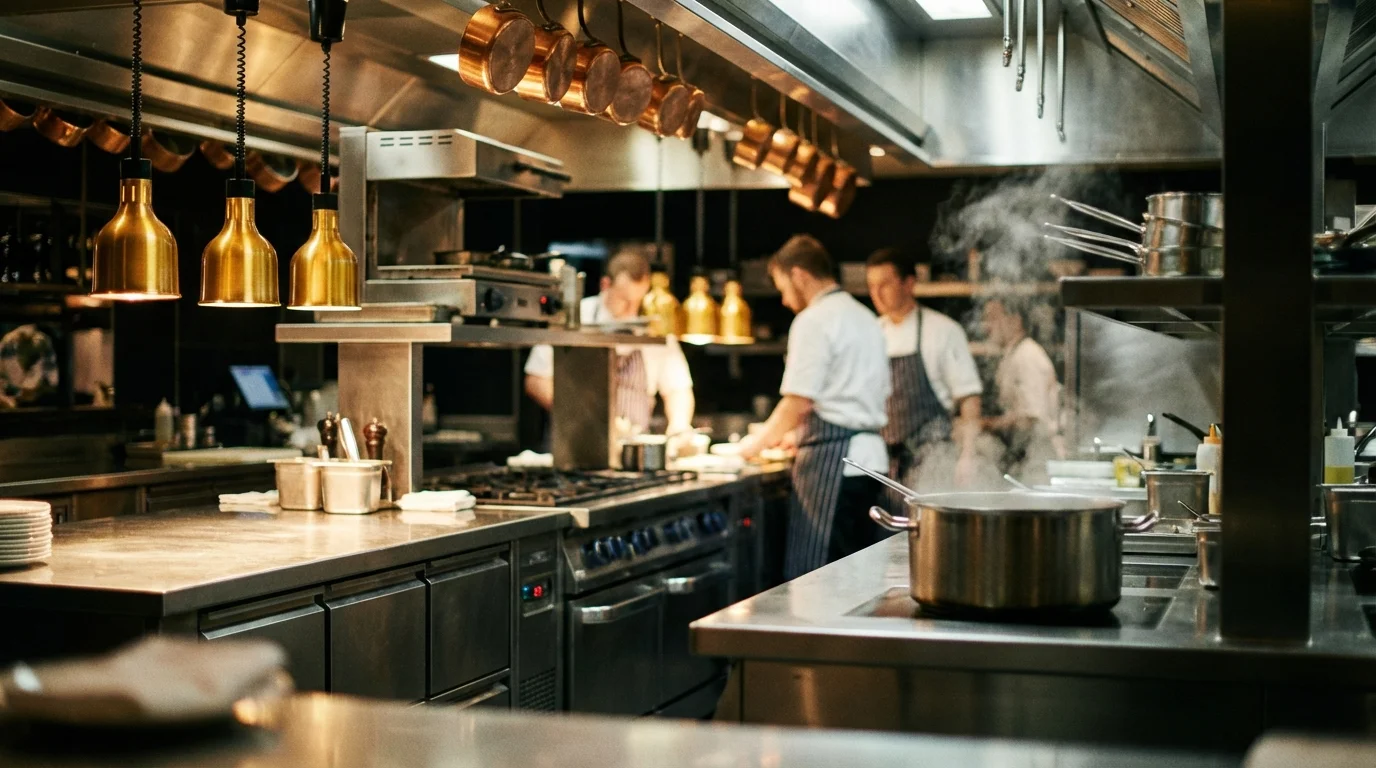
The operational rollercoaster of a MICE hotel
Hotels with a MICE vocation (Meetings, Incentives, Conferences, Exhibitions) live a reality unlike anything in conventional HORECA. It is not gradual seasonality like a resort, nor predictable daily variation like an urban hotel. It is a binary, brutal, concentrated jump: from standard operations to industrial-scale production in a matter of hours, and back to normal three days later.
A 2,000-person conference over 3 days means producing and serving between 18,000 and 24,000 additional F&B services in 72 hours. And these are not simple services: morning and afternoon coffee breaks with setups in multiple simultaneous rooms, lunches for hundreds of diners with set menus but uncertain quantities, networking dinners for 600 people and reinforced breakfasts for hosted attendees.
The central problem: set menu, open quantities
Unlike a restaurant where each diner chooses from the menu, in a MICE event the menu is agreed weeks in advance. You know exactly what the morning coffee break includes. What you do not know is how many of the 2,000 registered attendees will actually show up to each service. Experience says between 60% and 85% attend each coffee break, but that 25-point range applied to 2,000 people means the difference between preparing for 1,200 or 1,700. That is 500 servings of difference -- more or less.
Coffee breaks: the black hole of MICE costs
Nobody measures how much is actually consumed at a coffee break. The "usual amount" is prepared for the contracted number and whatever is left over is removed without quantifying. The cost of 4 daily coffee breaks for 2,000 people over 3 days can exceed 35,000 euros. Without detailed consumption data by service and shift, it is impossible to adjust quantities for the next similar event.
How does Controliza solves it?
Controliza's Forecast module incorporates event management as a differentiated forecasting layer. It does not treat a 2,000-person conference as 2,000 fixed covers. It models it as a probabilistic scenario where each service has a different estimated attendance, calculated from event type, historical data from similar events, and real-time confirmation data.
Forecasting by service, shift and event type
Controliza generates differentiated forecasts for each service: morning coffee break, afternoon coffee break, lunch, gala dinner, reinforced breakfast. Each has a different expected attendance ratio based on the hotel's history.
From forecast to order: purchasing sized to the peak
Once the forecast is generated by service, Controliza automatically translates it into purchasing needs by reference: kilos of fruit, bakery units, liters of juice, grams of coffee. The Purchasing module cross-references these needs with current stock, deducts what is available in storage, and generates incremental orders with the lead time each supplier requires.
How does Controliza solves it?
Controliza’s Forecasting module includes event management as a separate layer within the forecast. It doesn’t treat a 2,000-person conference as 2,000 fixed covers. It models it as a probabilistic scenario where each service has a different estimated attendance, calculated from the type of event, the history of similar events, and real-time confirmation data.
Forecasting by service, shift, and event type
Controliza generates separate forecasts for each service: morning coffee break, afternoon coffee break, lunch, gala dinner, enhanced breakfast. Each one has a different expected attendance rate based on the hotel’s historical data. The system knows that the first day’s coffee break has an 82% attendance rate, while by the third day it drops to 68%. It knows that lunch on the second day is the peak and that the closing dinner has 95% confirmed attendance. This makes it possible to size each service with the precision the kitchen needs to avoid both waste and shortages.
From forecast to order: purchasing sized to peak demand
Once the forecast has been generated for each service, Controliza automatically translates it into purchasing requirements by item: kilos of fruit, units of in-house bakery pastries, liters of juice, grams of coffee. The Purchasing module matches those requirements against current stock, deducts what is already available in cold storage, and generates incremental orders with the lead time required by each supplier. For fresh products, 24–48 hours. For bakery production, 72 hours. For high-volume dry goods, one week. This is how you forecast to buy exactly what you need, eliminating emergency purchases that drive up event costs.
Real-time adjustments during the conference
During the event days, the system recalibrates the forecast using actual consumption data from each service. If the no-show rate on the first day was 18% instead of the projected 12%, Controliza automatically adjusts quantities for the coffee breaks and lunches on the following days. This makes it possible to modify the fresh product order for the next day and progressively reduce overproduction throughout the event.
Post-event stock management
When the conference ends, the system identifies what surplus product remains and reallocates it to the hotel’s regular services. If 60 kg of cut fruit are left over from the last coffee break, the next day’s breakfast forecast incorporates it and reduces the purchase of fresh fruit accordingly. The system closes the event cycle without generating residual waste.
Are your MICE events generating waste or last-minute purchases?
Discover how Controliza turns conference contract data into a purchasing and production plan aligned with actual attendance for each service. Request a personalized demo and calculate the savings for your next event.
From event calendar to purchasing plan: where forecasting actually pays off
The real operational risk in MICE is not only service execution. It starts earlier, when purchasing, prep, and staffing decisions are made with partial visibility. A convention is confirmed, menus are closed, delivery notes begin to arrive, and the kitchen has to decide how much to buy, thaw, prep, and portion for services that may swing sharply by time slot, room, or attendee profile. If you overestimate, food cost rises fast through waste, idle mise en place, and ingredients that lose shelf life after the event. If you underestimate, you create stockouts, emergency purchases at higher prices, and service failures in the moments guests notice most.
This is where Forecasting changes the equation. Controliza combines historical consumption, hotel occupancy, event agenda, attendee volume, service type, weekday patterns, and external factors to generate a granular forecast by dish, service, day, and location. Instead of planning a conference as one large block, you can anticipate demand for each coffee break, buffet line, banquet menu, and room service peak. That forecast feeds production, purchasing, and recipe costing decisions before the first tray leaves the kitchen. The result is a tighter match between expected demand and actual output, with production deviation kept below 10%, waste reduced by 20% to 30%, and stockouts cut by up to 40%.
The practical impact is immediate. Purchasing teams can adjust order volumes by category, receiving can validate delivery notes against real event needs, and chefs can sequence prep to protect traceability while avoiding unnecessary overproduction. For multi-service events, the system also learns from actual consumption during the first day and helps recalibrate the following services. If attendance at the morning break lands at 68% instead of the expected 80%, that signal should affect the afternoon setup, the next day’s pastry production, and replenishment orders. Without that feedback loop, the same forecasting error gets repeated four or five times in a row.
For MICE hotels, this is the difference between reacting under pressure and operating with control. You stop treating conventions as exceptional chaos and start managing them as forecastable demand peaks. That has a direct effect on food cost, purchasing discipline, and service consistency. And when every event leaves clean consumption data behind, the next conference is no longer planned on intuition alone, but on evidence that improves margin event after event.
What impact does it have on margin?
Data measured in active Controliza clients.
If you want to go deeper, we recommend reading New menu, new forecast: how to launch dishes without breaking your prediction and Urban hotels and F&B: forecasting by occupancy and events.

