Tuesday night at a 250-room urban hotel running at 80% occupancy. Dinner service is proceeding normally: 60 covers in the restaurant, moderate room service, the bar nearly empty. Three days later, same hotel, same 80% occupancy, but there is a convention with 1,200 attendees at the nearby conference center. The restaurant has a waiting list, room service cannot keep up, and the bar is billing three times as much. Same occupancy, double the F&B demand. If your forecast only looks at rooms sold, you will always be late.
The PMS does not tell you the whole story
Most urban hotels base their F&B forecasts on a single data point: PMS occupancy. It makes sense, because there is a direct correlation between rooms sold and breakfast covers. But that correlation breaks down as soon as external variables appear that the PMS does not track.
A convention, a trade show, a sporting event or a major concert alter F&B consumption patterns in ways that occupancy alone cannot predict. Business guests during a convention eat breakfast earlier and more heavily. External attendees who are not staying at your hotel but looking for a nearby restaurant increase restaurant demand. The bar becomes a post-event networking spot.
Day-of-week variability is dramatic
In an urban hotel, a Tuesday and a Thursday look nothing alike. Tuesday is quiet corporate: guests who dine out, light room service, early and quick breakfast. Thursday accumulates departures from 2-3 night business trips, new weekend leisure arrivals and, often, corporate events. F&B consumption between both days can vary by more than 40% with the same base occupancy.
Room service versus restaurant: two different worlds
When a business guest arrives from a late flight at 10 p.m., they order room service. When that same profile is in the city for an event, they go down to the restaurant with colleagues. The mix between room service and restaurant changes completely depending on the reason for the stay, and with it, kitchen production planning, staffing shifts and fresh produce purchasing.
External events: the data point missing from your PMS
The PMS knows you have 200 rooms occupied. What it does not know is that tomorrow a medical convention with 3,000 attendees begins 400 meters from the hotel. Nor does it know that this weekend there is a football match that will pack the bar for 4 hours. These events are not in your hotel management system, but they directly impact your F&B bottom line.
The cost of forecasting with occupancy alone
When F&B forecasting relies solely on PMS occupancy, two equally harmful outcomes occur. On event days, you fall short: fresh produce is missing, the kitchen improvises, service suffers and the guest has a mediocre experience. On non-event days, you overproduce: you buy too much, prepare too much and waste too much.
Data measured in active Controliza clients.
The root of the problem is that F&B planning in urban hotels needs three layers of data, not one: PMS occupancy, external events calendar and historical consumption patterns by day of week and guest type. Without all three, any forecast is partial.
How does Controliza solves it?
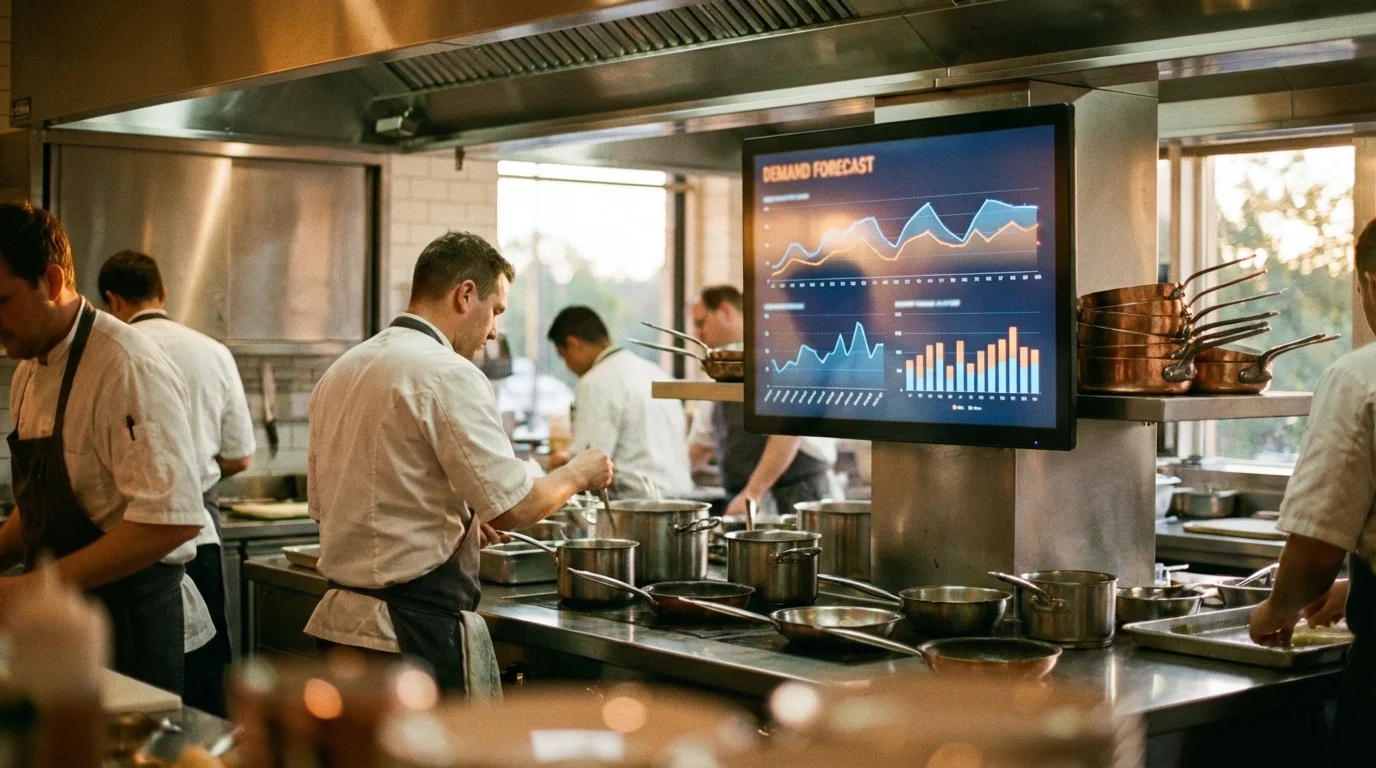
Controliza's Forecast module is designed to integrate the three data layers that an urban hotel needs. It does not just read PMS occupancy: it cross-references that information with the local events calendar and with real F&B consumption history by day of week, time slot and point of sale.
PMS + external events + history integration
Controliza connects to your PMS to read forecast occupancy and reservation type (business, leisure, group). In parallel, it incorporates the calendar of events, holidays and external variables that affect demand. The system crosses both inputs with real consumption history to generate an F&B forecast by point of sale, shift and day.
Forecast by point of sale: restaurant, bar, room service
Forecasting breakfast covers is not the same as forecasting late-night bar consumption. The Forecast module generates differentiated forecasts for each hotel point of sale, because the channel mix varies radically depending on the day and context. A Friday with an event generates bar peaks; a business Tuesday concentrates demand on room service.
Granular forecast by SKU
Beyond forecasting covers, Controliza drills down to the SKU-level forecast: how many kilos of salmon, how many pastry units, how many liters of orange juice you need for each service. That is what turns the forecast into automatic purchase orders and a concrete production plan.
The Controliza platform for hotels connects forecasting, purchasing and production in a single flow. The result: less waste, better service and a predictable food cost even during the most volatile weeks of the calendar.
Does your hotel forecast F&B based on occupancy alone?
Discover how Controliza integrates PMS, external events and consumption history to generate truly accurate F&B forecasts. Request a personalized demo and see the impact on your operations.
From forecasting to execution: purchasing, production, and waste under control
The challenge isn’t just anticipating how many breakfasts or dinners you’ll serve. The real impact shows up when that forecast reaches day-to-day operations: how much you buy, what you produce, what you prepare for the buffet, which staff you schedule, and how much waste risk you take on. In urban hotels with multiple F&B channels, a forecasting error quickly turns into overproduction, stockouts, pressure on the kitchen, and a food cost that spirals without anyone clearly seeing why.
That’s where a useful forecast needs to connect with specific decisions. If you expect higher consumption from groups, events, or changes in guest mix, you need to adjust recipe costing, fresh purchasing, base production, and buffet replenishment with real lead time, not when service is already under pressure. You also need to distinguish which part of demand will go to breakfast, restaurant, bar, room service, or banqueting, because each channel has different rhythms, waste levels, and staffing needs. Better forecasting isn’t just about selling more: it’s about protecting margin.
With Forecasting, Controliza combines occupancy, group bookings, seasonality, and operational signals to turn expected demand into actionable planning. In addition, by measuring actual buffet consumption through computer vision and consolidating the chain’s F&B KPIs, you can compare forecast vs. consumption, detect deviations, and correct them before they become structural waste. The result is a more precise operation: less overproduction, better traceability between purchasing and consumption, and faster decisions around delivery notes, replenishment, and daily production.
When that layer of operational intelligence is in place, F&B stops reacting too late. You buy with better judgment, produce what’s needed, and adjust service based on real expected demand, not intuition. In an environment where a change in guest profile or a nearby event can alter consumption within hours, that difference shows up in margin, service consistency, and your ability to scale operations without losing control.
From forecast error to operational waste
When demand signals are incomplete, the problem is not only missed revenue. It shows up as waste, unstable food cost, rushed purchasing and weak traceability. Kitchens overproduce buffet items “just in case,” then cut portions later, while banquet and room service teams compete for the same stock without a reliable view of expected demand.
Controliza Forecasting connects PMS data with group bookings, seasonality and local event patterns to predict outlet-level demand before service starts. That lets you align recipe costing, purchasing and production planning, validate delivery notes against real consumption, and reduce avoidable waste while protecting service quality.
What impact does it have on margin?
Urban hotels that have implemented Controliza for F&B management report consistent results within the first 6 months:

