Since the POS on the iPad appeared, the restaurant industry has experienced its greatest technological revolution in the last eight months. Obviously, this was all caused by the pandemic. Advances that would normally take five years to become widespread have leapt into the spotlight in six months. Now everything that can help restaurant owners simplify their business and keep people safe is being tested. Artificial intelligence in restaurants is the present.
Artificial intelligence: the new must-have for restaurants
It’s no surprise that, as in other areas of business, restaurants are turning to artificial intelligence and machine learning to help optimize processes and manage operations. AI has made its way into every aspect of modern restaurants, from sales to delivery, inventory management, and more.
How can artificial intelligence increase overall sales?
The secret behind artificial intelligence is that it is constantly learning (hence the term “machine learning”). When you feed it large amounts of data, it can identify patterns and predict what might happen the next time a similar event occurs. That means restaurant owners can use AI to track food trends and better understand current consumer needs.
Tastewise
Tastewise is the right platform for this task. It can analyze input from multiple data sources, including menus, reviews, and social media platforms, to identify target market segments and detect emerging trends. Tastewise uses real-time data to predict shifts in consumer demand and uncover opportunities to maximize revenue.
You’ll understand what your customers need here and now, and you’ll be able to give them exactly what they want.
Dynamic Yield
AI can also be applied to individual orders. In fact, McDonald’s saw so many advantages in machine learning-based order forecasting that it acquired the company doing it best. Dynamic Yield uses an advanced machine learning engine to predict what customers will want to order. It analyzes factors such as the time of day, the weather, wait times, and previous orders, and displays those items first.
According to reports, this allowed Dynamic Yield to reduce wait times at McDonald’s drive-thrus by nearly 30 seconds in 2019 alone, which, considering how many extra transaction hours that adds up to over the course of a year, translates into many more orders and much higher revenue. Unfortunately, McDonald’s now owns the rights to its technology and no longer provides services to other companies in the industry.
Controliza
Of course, if you want to forecast your sales in advance (and who wouldn’t want AI forecasts that are 50% more accurate?), you’ve definitely come to the right place.
Controliza uses a machine learning algorithm based on sales history, events, promotions, and even the weather to predict future sales at weekly, daily, hourly, and item level. This allows you to stay prepared at all times by knowing which products will be most popular (and therefore what you need to have on hand), when the busiest periods will be (so you can schedule enough staff to handle them), and what revenue you can expect with accuracy (giving you peace of mind). On top of that, Controliza develops its own AI-powered algorithms specifically designed for restaurants. This adds extra value to the product, since it has been created especially for the sector.
Will artificial intelligence be the answer to the food waste problem in the foodservice industry?
One third of all food waste generated comes from the foodservice sector. This not only costs restaurants money, but also harms the environment. In fact, if food waste were a country, it would be the third-largest emitter after China and the United States.
Winnow
Winnow has set out to change this. Its waste monitoring system uses machine learning-powered cameras to identify, track, and monitor food waste generated in the kitchen, showing chefs and operators the food they throw away in revenue terms.
Winnow’s AI technology not only makes chefs more accountable for food waste, but its analytics also provide the insights needed to reduce waste by 50% and cut food cost by up to 8%.
Controliza
Controliza’s forecasts also help you significantly reduce food waste. We provide insights into the consumption of purchased products so you can manage purchasing in the best possible way and buy only what you’re actually going to need. In addition, you can boost lower-demand days by running promotions or remove products from the menu that are not selling before it’s too late.
There’s no doubt that in the near future we’ll see more uses of artificial intelligence in restaurants related to inventory. Think of stock counts carried out using only a camera, refrigerators with AI-controlled temperature zones based on the food stored inside, and smart ovens that never let anything burn. All of these are ways to reduce the food we waste and lessen the environmental impact of the hospitality industry.
Conclusions
People can sometimes be intimidated by the idea of artificial intelligence because science fiction movies have given us the impression that robots are taking over. But that’s not the case. Hopefully, the examples above show that artificial intelligence in restaurants simply creates tools that can simplify and optimize how businesses operate. Companies do not invest in these tools to remove the human side of a process; instead, they work alongside people to create even better processes.
That’s why it is so important in the foodservice sector right now. The current global situation means we need all the help we can get to run businesses in more efficient and profitable ways. Thanks to all the research carried out in the field of AI, this is now a real possibility.
If you want to learn more about our tools, visit our website.
You can also visit our LinkedIn profile
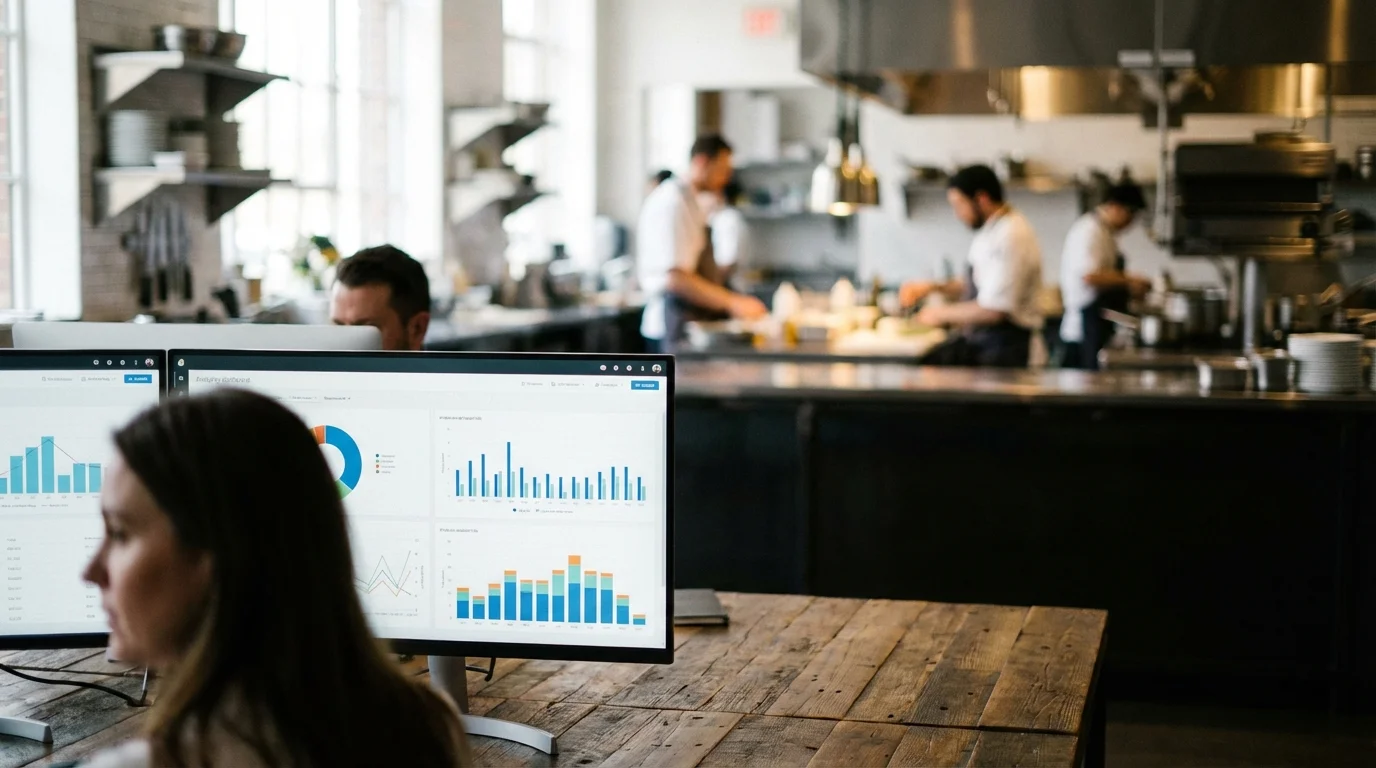
Artificial intelligence: the new 'must' for restaurants
It is no surprise that, as in other parts of the business world, restaurants are turning to artificial intelligence and machine learning to help optimize processes and manage operations. Artificial intelligence has entered every aspect of modern restaurants, from sales to delivery, inventory management, and more.
How can artificial intelligence increase overall sales?
The secret of artificial intelligence is that it is constantly learning (hence the name "machine learning"). When you provide it with a large amount of data, it can map patterns and predict what might happen the next time a similar event occurs. Therefore, restaurant owners can use artificial intelligence to track food trends and understand current consumer needs.
Tastewise
Tastewise is the right platform for this task. It can analyze input from multiple data points across menus, reviews and social media platforms to identify target market segments and understand potential trends. Tastewise uses real-time data to predict changes in consumer demand and provide opportunities to maximize revenue.
You will understand the needs of your customers here and now, and you can provide them with exactly what they want.
Dynamic Yield
AI can also be applied to individual orders. In fact, McDonald's saw so many advantages in machine learning-based order forecasting that it acquired the company that did it best. Dynamic Yield uses an advanced machine learning engine to predict what customers will want to order. It makes its analysis based on time of day, weather, wait time and previous orders, and displays those items first.
According to reports, this allowed Dynamic Yield to reduce wait times at McDonald's drive-thrus by almost 30 seconds in 2019 alone, which when you consider how many extra transaction hours that produces over the course of a year translates into many more orders and much more revenue. Unfortunately, McDonald's now owns the rights to its technology and no longer provides services to other companies in the sector.
Controliza
Of course, if you want to forecast your sales in advance (and who wouldn't want AI forecasts that are 50% more accurate?), you have certainly come to the right place.
Controliza uses a machine learning algorithm based on sales history, events, promotions and even weather to predict your future sales on a weekly, daily, hourly and item-by-item basis. This allows you to always be prepared, knowing which products will be most popular (and therefore what to have on hand), when the rush will be (and having enough staff working to handle it), and a precise view of the revenue you will earn (giving you peace of mind). Additionally, Controliza develops its own algorithms using artificial intelligence, specifically created for restaurants, giving the product added value since it is built specifically for the sector.
Will artificial intelligence be the answer to the food waste problem in the restaurant industry?
A third of all food waste generated comes from the restaurant sector. This not only costs the restaurant, but also the environment. In fact, if you treat food waste as a country, it would be the third largest emitter after China and the United States.
Winnow
Winnow has set out to change this situation. Their waste monitoring system uses machine learning-powered cameras to identify, track and monitor processed food waste in the kitchen, showing chefs and operators the food they throw away in terms of revenue.
Winnow's artificial intelligence technology not only makes chefs more accountable for food waste, but its analysis provides the information needed to reduce waste by 50% and cut food costs by up to 8%.
Controliza
Controliza's forecasts also help you significantly reduce food waste. We provide you with information on purchasing product consumption so you can manage your purchases in the best possible way and buy only what you will need. Additionally, you can boost slower demand days with promotions or remove underperforming products from the menu before it is too late.
There is no doubt that in the near future we will see more uses of artificial intelligence in restaurants related to inventory. Think about inventory counts using only a camera, AI-controlled temperature zones in refrigerators based on the food placed inside them, and smart ovens that never let anything burn. All of these are ways to reduce the food we waste and to decrease the environmental impact of the hospitality sector.
Conclusions
People can sometimes be frightened by the notion of artificial intelligence thanks to science fiction movies that give us the idea that robots are taking over. But that is not the case. Hopefully the above demonstrates that artificial intelligence in restaurants simply creates tools that can simplify and optimize how businesses operate. They are not invested in to remove the human aspect of a process, but rather they work with people to create even better processes.
That is why it is so important in the restaurant sector right now. The current state of the world means we need all the help we can get to run businesses in more efficient and profitable ways. Thanks to all the research done in the field of AI, this is now a real possibility.
If you want to learn more about our tools, visit our website.
You can also visit our LinkedIn profile.
If you want to go deeper, we recommend reading Basque Culinary Center and Controliza: A Strategic Alliance and Artificial intelligence in hospitality: the future with AI and Big Data.

